





By Asep Fathulrahman, Religious Social Observer, Serang, Banten
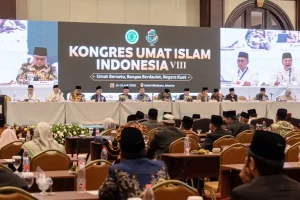
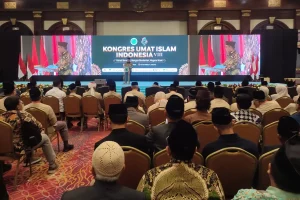
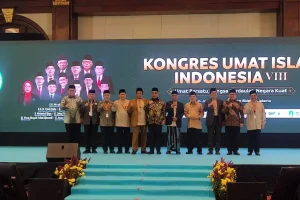
The 8th Indonesian Muslim Congress, or KUII, took place in Jakarta from July 24 to 26, 2026. More than 400 participants, representing 87 national Islamic organizations, gathered under a bold theme: United Ummah, Sovereign Nation, Strong State.
KH Marsudi Syuhud, the head of the steering committee, broke down the theme into two practical concepts: taswirul manhaj, which means unifying thought, and tansiqul harakah, which means coordinating action. But after eight congresses and decades of Islamic organizational life in Indonesia, we have to ask: does KUII VIII actually address the real issues facing Muslims today? Have its recommendations, known as the Taujihat, truly met the needs of the people?
If we are being honest, the answer is far from 100 percent. So how much of the ummah’s problems did this congress actually solve? Is it above 50 percent? Below 50? Under 10? Maybe even less than 5?
Read Also: Remembering the 1969 Al-Aqsa Mosque Arson: A Tragedy That United the Muslim World
Think about it. Many Muslims today get their religious guidance from YouTube scholars, not from congresses. Is it possible that YouTube does a better job answering their questions and concerns? I am not trying to dismiss KUII VIII, but we need a reality check. We have to verify what Muslims actually need on the ground, the urgent issues they face, and practical ways to help them.
So let us cut to the chase. What are the real problems of Indonesian Muslims today? And do the Taujihat actually respond to them?
The everyday struggles of Indonesian Muslims are no longer about ideology, like in the Sukarno or Suharto eras. The challenges now revolve around institutions, the economy, politics, human resources, technology, data, media, and, most importantly, the ability to organize Muslim strength effectively.
Take the economy, for example. If Muslim economic potential were well organized, it could significantly reduce poverty among the poor and vulnerable through optimized zakat, infaq, and sadaqah. But the reality is that this potential remains scattered and fragmented. As a result, Muslims are powerless against large capitalist players, hence the continued dominance of modern retail chains like Alfamart and Indomart.
Read Also: Abu Ayyub Al Anshari, the Inspirer of Constantinople’s Liberation
Yes, capitalism may not care about religious identity. But why is it that Indonesia’s 240 million strong Muslim population loses out to a handful of better organized capitalists?
The Core Problem: Disorganization
This lack of organization is not just an economic issue. It is also felt in science and technology, media, data, and other strategic fields. Muslims are often left behind because their strength is divided. And since the ummah is the nation, and the nation is the ummah, these problems affect everyone. We are the majority, yet we are powerless because we are not organized.
That is why having a unified, disciplined Muslim leadership, rooted in Islamic principles, is a fundamental need. It is the only way to address the core challenges of the ummah.
Read Also: Sa’ad bin Abi Waqqash, the First Islamic Archer and Inhabitant of Heaven
As Musthofa Shobri Afandi wisely said, Truth that is unorganized will be defeated by falsehood that is organized.
The Quran is clear about this. Unity is not just a suggestion, it is a command. Allah says, And hold firmly to the rope of Allah all together and do not become divided. (QS. Ali ‘Imran: 103)
Just as Muslims pray in congregation five times a day with one Imam, not many, so too should they live their lives. One Imam, one congregation, one unified body. That way, all strategic potential can be channeled effectively, far better than the current state of fragmentation.
The Question of Unity versus the State
Read Also: Reading 8th Indonesian Islamic Congress’ Taujihat Through the Lens of Ulul Albab
Now, a common question arises. If all Muslims unite under one leadership, does that clash with the legitimate government of the Unitary State of the Republic of Indonesia, or NKRI? Would that make Muslim unity illegal, a state within a state, leading to accusations of dualism and calls for crackdowns?
The answer is no. Muslim unity and the NKRI do not have to be in conflict. Unity is commanded by the Quran, and congregation under an Imam is commanded by the Prophet. The NKRI, meanwhile, is a historical fact, just like the colonial era, the caliphate, and the formation of modern nation states.
History shows us the progression. The Prophetic Caliphate, the kingship era, colonial occupation, and finally independence and the birth of the NKRI. These are historical realities. You can acknowledge them or not, but they are real.
Similarly, the Jamaah, the congregation of Muslim unity, is also real, backed by clear Islamic evidence and historical precedent. The vast Ottoman Empire, for example, was later carved into small nation states by colonial powers over centuries.
Read Also: Once Again, Indonesia-Palestine Relations
Over time, Muslims became disconnected from their own sense of unity, even while reciting the Quranic verse on unity and praying in congregation daily.
No Need to Pit One Against the Other
Once again, if Muslims unite in solidarity and loyalty under one Imam, this does not contradict the existence of the NKRI under President Prabowo Subianto. The two operate on different foundations. The President is a representative of the people, elected democratically based on the 1945 Constitution and Pancasila. The Jamaah is based on Islamic law, the Quran, and the Sunnah. They are not in opposition.
This article is not meant to downplay the achievements of KUII VIII or its Taujihat But it is a contribution to the conversation, a reminder that Muslims, including those in Indonesia, are in urgent need of a unifying container, Al-Jamaah.
Read Also: Football, Religion, and Solidarity with Palestine
Allahu a’lam, God knows best.[]
Mi’raj News Agency (MINA)
Read Also: The Sacrifices of Gaza’s Fighters for the Common Good







 Mina Indonesia
 Mina Arabic
 Mina Sport