





By Imam Yakhsyallah Mansur
بِسْمِ اللَّهِ الرَّحْمَنِ الرَّحِيمِ
Allah Subhanahu wa Ta’ala says:
إِنَّمَا الْحَيَاةُ الدُّنْيَا لَعِبٌ وَلَهْوٌۗ وَإِنْ تُؤْمِنُوا وَتَتَّقُوا يُؤْتِكُمْ أُجُورَكُمْ وَلَا يَسْأَلْكُمْ أَمْوَالَكُمْ ٣٦ (محمد [٤٧]: ٣٦)
Read Also: Remembering the 1969 Al-Aqsa Mosque Arson: A Tragedy That United the Muslim World
“The life of this world is nothing but play and amusement. But if you believe and are mindful of Allah, He will give you your rewards, and He will not ask you for your wealth.” (QS. Muhammad [47]: 36).
This verse isn’t a blanket ban on fun and games. Rather, it’s a gentle warning not to get so caught up in worldly pleasures that we forget the eternal life to come.
Imam At-Tabari, may Allah have mercy on him, explained in his book Jāmi’ul Bayān that the word لَعِبٌ refers to being distracted from what truly matters, while وَّلَهْوٌۗ refers to things that bring no real benefit. Both describe how easily worldly life can deceive us.
Play only becomes problematic when it keeps us from obeying Allah. But when it leads to goodness, it remains well within the bounds of what is permitted.
Read Also: Abu Ayyub Al Anshari, the Inspirer of Constantinople’s Liberation
Allah doesn’t forbid us from enjoying life. He simply reminds us not to let that enjoyment make us forget why we were created to worship Him.
Imam Al-Qurthubi, may Allah have mercy on him, added that this verse teaches us to strike a balance between worldly and spiritual matters. Entertainment and games are essentially permissible, as long as they don’t distract us from worship, lead us into sin, or stop us from fulfilling our duties.
Islam sees recreation and sports as part of our natural human needs. In fact, they can even become acts of worship when we intend them to keep us healthy, strengthen our bodies, build bonds of brotherhood, and bring benefit to others.
In this light, football, played with sportsmanship, teamwork, discipline, and good character that can be a powerful tool for building character and fostering a sense of community.
Read Also: Sa’ad bin Abi Waqqash, the First Islamic Archer and Inhabitant of Heaven
The fame of players and coaches, and the massive global attention a match draws, can all be channeled toward rallying solidarity, raising awareness about caring for others, and upholding justice, brotherhood, and compassion.
This is the lens through which Muslims should view football. The issue isn’t the game itself that it’s how we choose to position it in our lives.
Football Shouldn’t Become a Religion
In Islam, everything has its proper place. Football is a form of entertainment. We can love it, but it should never rival our love for Allah and His Messenger. It can bring us joy, but it shouldn’t consume our hearts to the point of neglecting our obligations.
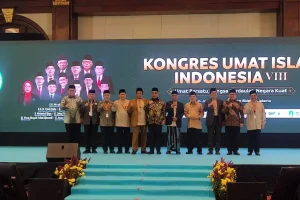
Read Also: Reading 8th Indonesian Islamic Congress’ Taujihat Through the Lens of Ulul Albab
For many in the West, football has taken on social roles that religion once filled. People who used to go to church every Sunday now head to the stadium instead. The hymns once sung in places of worship have been replaced by chants echoing through the stands. Loyalty to a club is passed down from parents to children, much like a family tradition.
This has led many social scientists to call football a “civil religion.” British sports journalist Simon Kuper describes how football in England has become a social identity, shapes political policy, and serves as a source of national pride.
Of course, calling football a “religion” isn’t meant theologically. It simply means that football has taken on some of the social functions that religion traditionally serves: building a sense of belonging, strengthening group solidarity, and creating shared rituals.
That’s why Muslims must be careful not to turn football into a “new religion” that displaces Islam’s role in their lives. Our love for a club or a player should never turn into blind fanaticism that overshadows our love for Allah and His Messenger.
Read Also: Once Again, Indonesia-Palestine Relations
Football as a Platform for Da’wah
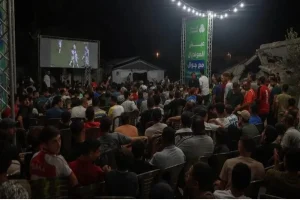
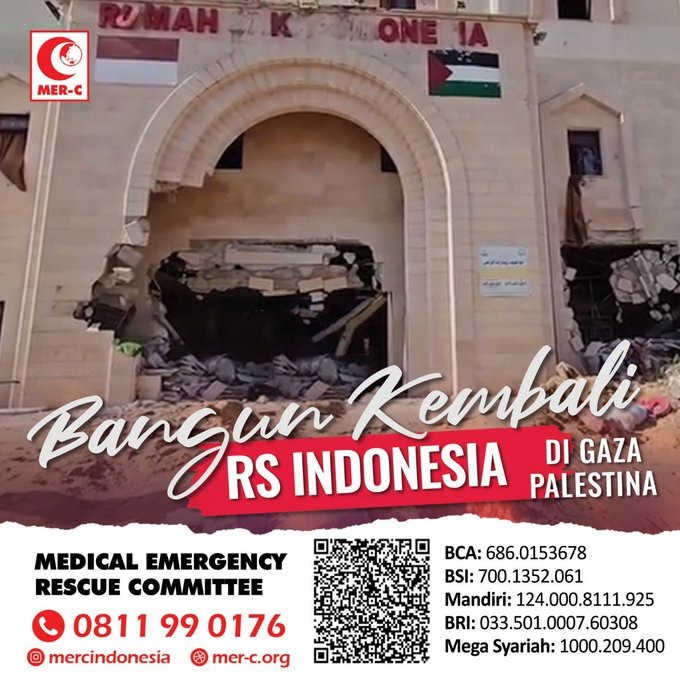
The massive attention football commands can be harnessed to spread values of brotherhood, compassion, and empathy for those who are oppressed and suffering, especially the Palestinian people.
The fame that footballers enjoy can be put to good use. This is where the game finds a higher purpose, not just chasing trophies, but also serving as a stage to share universal Islamic values, build bridges of brotherhood, and speak out for the oppressed.
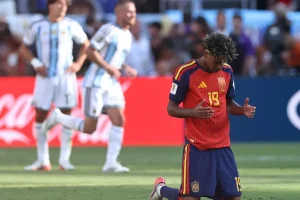
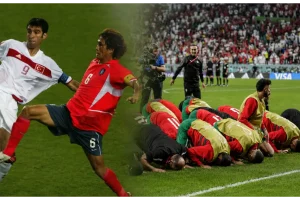
Many Muslim footballers have used their platform to express their faith. A prostration of gratitude after scoring a goal, showing grace in victory and defeat, respecting opponents, and showing care for others, these are simple yet powerful acts of da’wah.
Read Also: KUII For Whom? A Critical Reflection on the 8th Indonesian Muslim Congress
One of the best examples is Mohamed Salah (محمد صلاح). The Egyptian star isn’t just known for his goals, he’s also known for consistently showing his Muslim identity. His trademark sujood celebration has become a familiar sight in stadiums around the world. Off the pitch, Salah has repeatedly spoken out against attacks on civilians in Gaza and called for humanitarian aid to be allowed in.
Other Muslim players have followed suit. Lamine Yamal, the young Spanish winger, has shown his support for Palestine on multiple occasions, both on and off the pitch, through social media posts, public statements, and support for humanitarian efforts.
Sadio Mane of Senegal is another example. The son of a mosque imam, he’s known for his generosity and social conscience. He uses much of his salary to fund scholarships, build hospitals, mosques, schools, and public facilities in his home village of Bambali in southern Senegal.
His philanthropy earned him the Socrates Award in 2022, given to the player who has made the biggest contribution to social change. It’s not an exaggeration to say that all of this reflects the values taught in the Quran, in Surah Al-Ma’un [107], verses 1-6.
Read Also: The Sacrifices of Gaza’s Fighters for the Common Good
And it’s not just players. Fans have also shown their support. Celtic FC supporters in Scotland have been flying Palestinian flags at matches for years. In Morocco, fans of Raja Casablanca and Wydad Casablanca have repeatedly displayed stunning choreographed solidarity for Gaza.
All of this shows that football can become a space where conscience meets the world—a platform for sharing messages of justice that transcend borders, ethnicities, and religions.
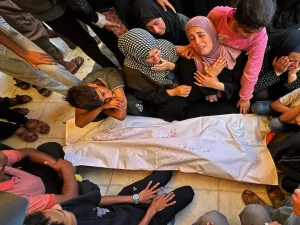
These moments remind us that Palestine is never truly forgotten. Even amid the excitement of a match, there are always people reminding the world that there is still a nation living under occupation—losing homes, families, and even the right to play football on their own land.
Football also teaches us about leadership and following orders. On the pitch, every player has a different role, but they all move according to the coach’s plan. Without discipline and obedience, the game falls apart.
Read Also: My House is Blocked by the Israeli Yellow Line
Football teaches us that victory doesn’t come from individual brilliance alone. No matter how good a striker is, they still need accurate passes, solid defenders, a sharp goalkeeper, and a smart coach.
This is where the game becomes a lesson: teamwork makes all the difference. Victory is a collective achievement, not a personal one.
In Islam, this is what we call communal life (berjamaah). Following the leader and staying resilient are among the keys to success. In the work of da’wah, success comes from organized, collective effort. These are the values we must revive in the fight against oppression and colonization.
This is where religion, football, and Palestine come together. Religion gives us faith and moral grounding. Football gives us a stage that reaches billions. Palestine gives us a cause to fight for—so that popularity doesn’t stay just about entertainment.
Read Also: Azerbaijan’s Mine Action Efforts: Clearing the Path for Recovery and Development
When all three move together, the pitch stops being just a place to score goals. It becomes a space for justice, a platform for brotherhood, and a reminder to the world that freedom and human dignity are values worth fighting for.
The 2026 World Cup shouldn’t just be remembered for a new champion or amazing goals. More than that, it should be a moment to show that sports can be a path for da’wah, a tool for building character, and a voice for humanity.
As long as the world is watching, the voice against the cruelty of Zionist Israeli occupation and for Palestinian freedom must never stop being heard. That is the real victory: when sports become a force for solidarity, and every cheer strengthens hope for justice.
So let’s use sports to achieve excellence, build brotherhood, and stay healthy. Let’s make religion our compass, guiding every step so that our popularity serves to bring benefit to all of humanity.[]
Read Also: Debunking Zionist Myths and Falsehoods
وَاللَّهُ أَعْلَمُ بِالصَّوَاب
Mi’raj News Agency (MINA)






 Mina Indonesia
 Mina Arabic
 Mina Sport