





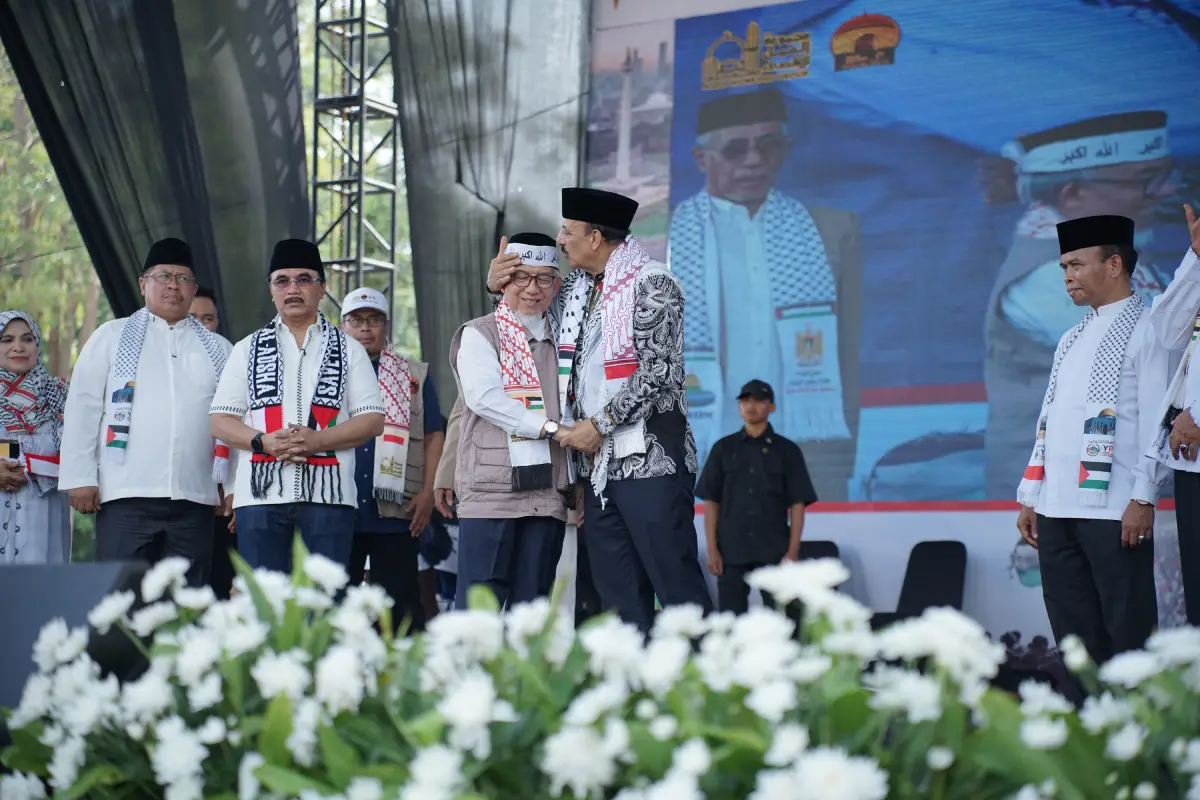
Jakarta, MINA – There was a scene that seemed simple, yet carried deep meaning at the opening of Palestinian Solidarity Month (BSP) 2026 at the National Monument (Monas) area in Jakarta on Sunday. Palestinian Ambassador to Indonesia Abdul Fattah A.K. Al-Sattari kissed the forehead of Aqsa Working Group (AWG) principal patron Imaam Yakhsyallah Mansur.
The moment drew attention from various quarters. The kiss on the forehead seemed to convey a message far deeper than a thousand words. It can be interpreted as an expression of appreciation from the Palestinian people to the Indonesian nation, which has never stopped supporting their struggle.
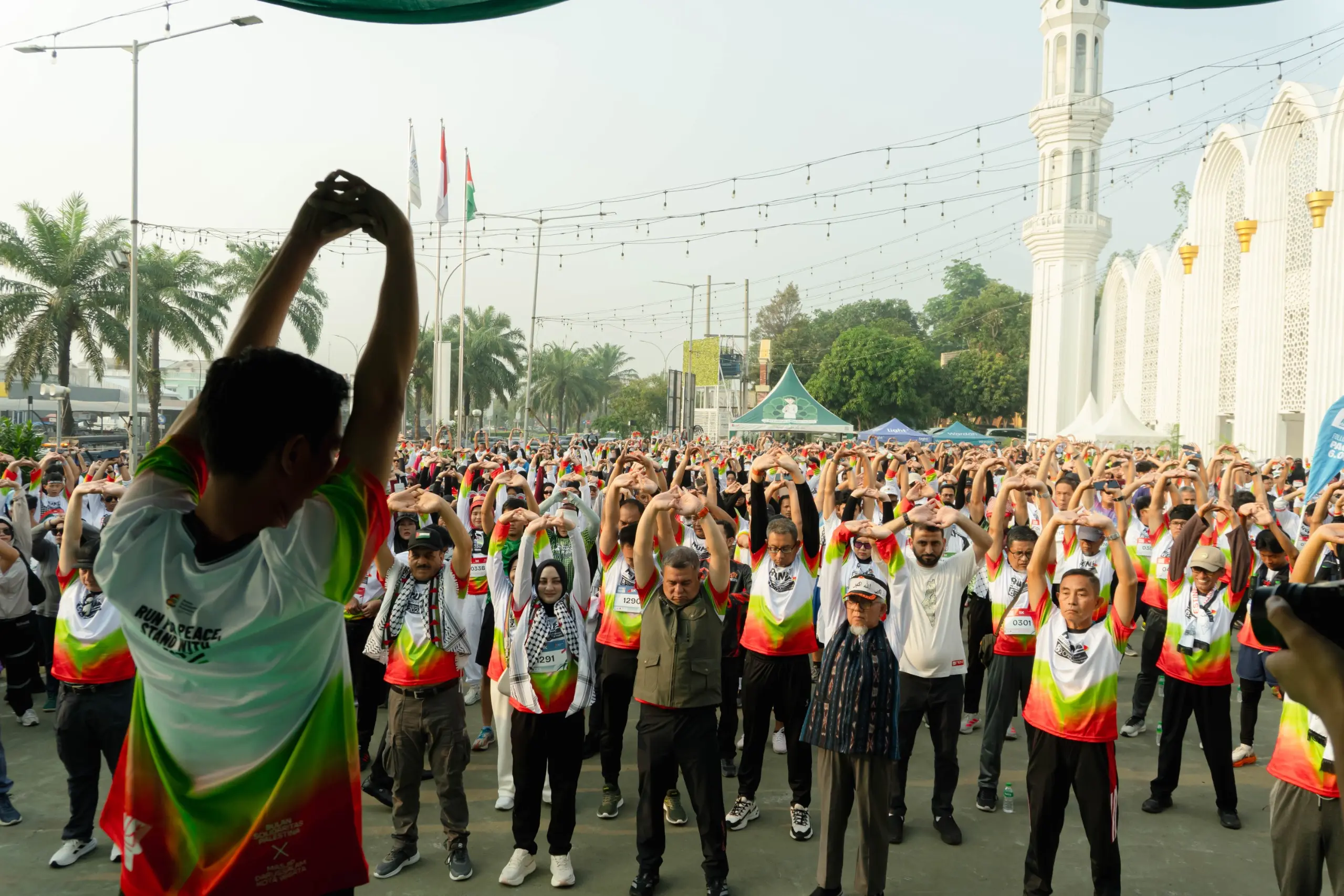
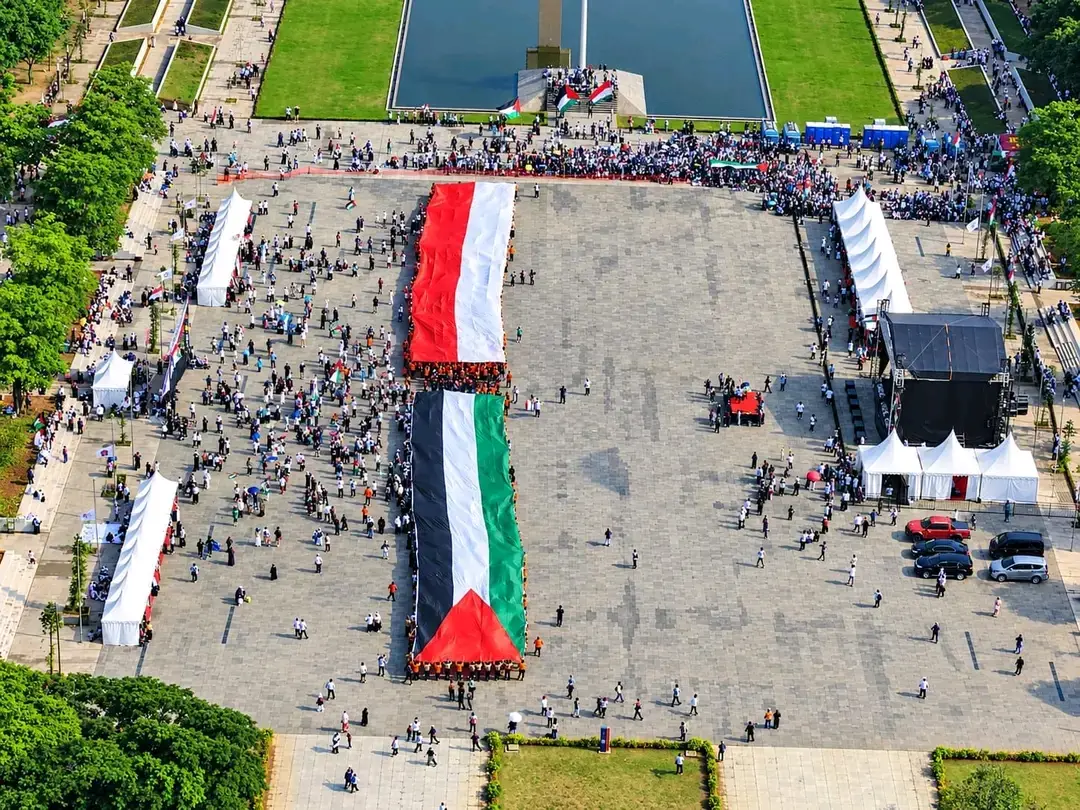
The opening of BSP 2026 was not merely a ceremony. More than 5,000 participants attended the event. They came from various backgrounds: scholars, community figures, humanitarian activists, students, Islamic boarding school students, journalists, and the general public.
Some traveled long distances, leaving behind families and obligations, even arriving since the night before. They covered their own transportation and expenses during the event. Not a few also set aside part of their livelihood for infaq and charity for the struggle.
Read Also: Remembering the 1969 Al-Aqsa Mosque Arson: A Tragedy That United the Muslim World
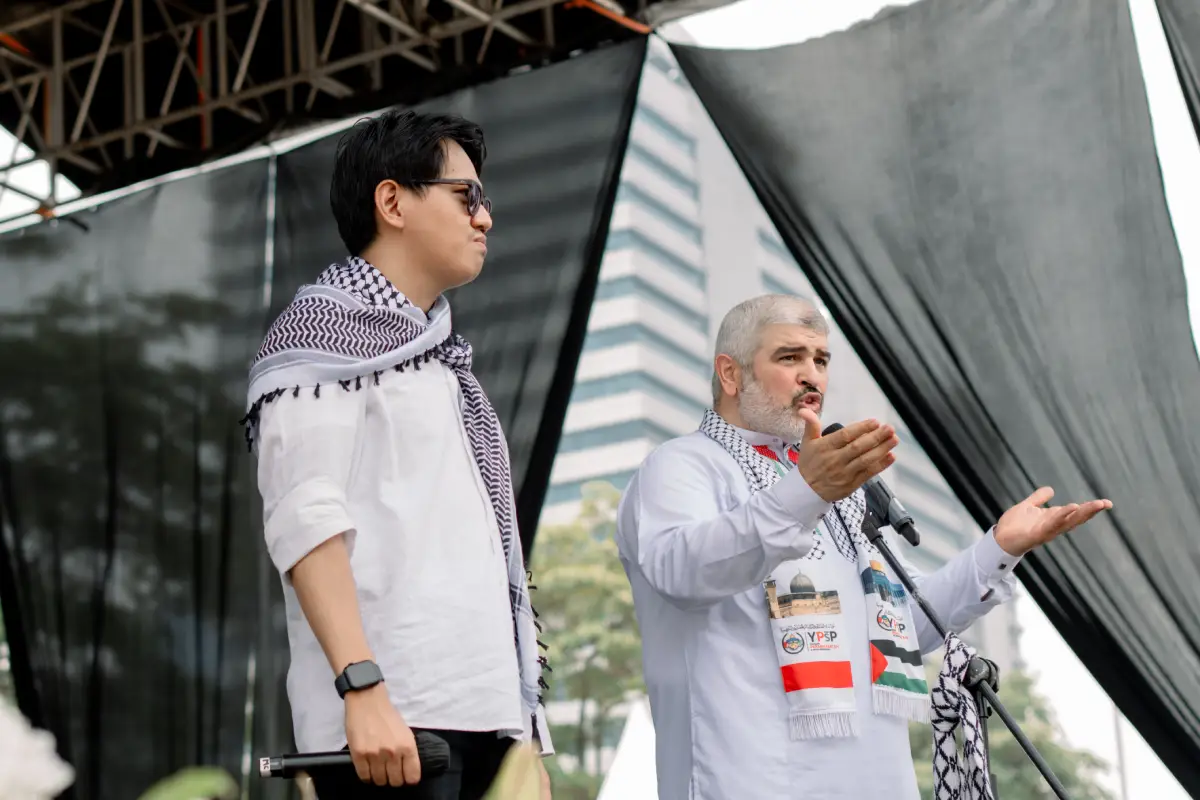
Figures, scholars, activists, and several public personalities attended to deliver speeches, prayers, and support. Their presence was not to seek payment or personal gain. They came out of a calling of conscience.
They gave their time, energy, thoughts, and even part of their wealth for a struggle believed to be part of humanitarian and faith responsibility.
This is the true face of solidarity. A movement not always measured by the size of funds, the grandeur of the stage, or the volume of news coverage and discussion. There is sincerity unseen by cameras, sacrifice unrecorded in activity reports, and prayers never announced to anyone.
In Arab tradition, kissing someone’s forehead carries a distinctive social meaning and respect. The gesture of kissing the forehead is an expression of very high respect, especially toward elders, scholars, parents, or revered figures.
Read Also: Abu Ayyub Al Anshari, the Inspirer of Constantinople’s Liberation
This explanation can be found in the fatwa of Egypt’s Dar al-Ifta on the tradition of kissing the hands of teachers and mentors. The official Egyptian religious institution explained that forms of respect vary according to community customs. Among Arab communities, kissing the forehead (head) of scholars is also a way of honoring people of knowledge.
Robert A. Barakat’s research titled Arabic Gestures, published in The Journal of Popular Culture, also notes that in a number of Arab societies, kissing someone’s forehead, nose, or hand is the highest gesture of respect.
In Indonesian tradition, respect for parents and elders also takes various forms. We know the tradition of shaking hands or kissing the hands of parents, teachers, and scholars. The Agency for Language Development and Books of the Ministry of Education and Culture, in the book Sahabatku Indonesia untuk Pelajar BIPA 1 (2019), records this as a habit of young people showing respect to elders.
Meanwhile, a kiss on the forehead in Indonesian society is also familiar as an expression of affection and closeness, especially in family relationships. A father kisses his child’s forehead, a mother kisses her beloved child, or family members give a kiss as an expression of love and prayer.
Read Also: Sa’ad bin Abi Waqqash, the First Islamic Archer and Inhabitant of Heaven
Thus, although the forms and customs are not always the same, both Arab and Indonesian societies recognize body language as an expression of respect and affection that is sometimes stronger than words.
In the context of Ambassador Al-Sattari as a representative of the Palestinian people and Imaam Yakhsyallah Mansur as one of the scholars of the archipelago, the kiss on the forehead became a symbol of respect transcending personal relations. It was also an expression of gratitude from a Palestinian representative to a figure who has devoted himself to the struggle for Al-Aqsa and Palestinian independence.
Palestine holds a special place in the history of Indonesia’s struggle. In fact, support for Palestinian independence emerged before this nation proclaimed its independence on August 17, 1945.
That support is rooted in the awareness that colonialism is a matter of humanity and justice. That is why the preamble to the 1945 Constitution affirms that independence is the right of all nations and colonialism in the world must be abolished.
Read Also: Reading 8th Indonesian Islamic Congress’ Taujihat Through the Lens of Ulul Albab
However, the relationship between the two nations does not stop at shared views. There is an emotional bond, religious brotherhood, and humanitarian concern that continues to be maintained.
For Indonesian Muslims, Palestine also holds a special position because there is Al-Aqsa Mosque, the first qibla of Muslims and one of the three mosques that have special status in Islam.
Therefore, defending Palestine is not merely a matter of defending another nation. There is awareness of brotherhood in faith, but also alignment with universal values: independence, justice, and human dignity.
This is where the meaning of sincerity finds its place. The Indonesian people do not wait for rewards from Palestine. There is no profit agreement as a condition for extending a hand. There is no cost-benefit calculation when people set aside money, volunteers sacrifice time, or activists continue to voice the suffering of the Palestinian people.
Read Also: Once Again, Indonesia-Palestine Relations
They do it because they believe that the suffering of a nation must not be witnessed in silence. That when a society is deprived of its rights, the human conscience should be moved to defend it.
The kiss on the forehead may have lasted only a few seconds. However, its meaning can linger far longer in memory. It serves as a reminder that struggle does not always require a big stage and thunderous words.
For activists, human rights defenders, volunteers, scholars, journalists, and all people who care about Palestine, the event becomes a source of inspiration. Do not let the struggle lose its spirit of sincerity. Do not let the defense of Palestine become merely a path to seeking popularity. For what is needed in the struggle are those willing to work, sacrifice, contribute their abilities, and remain steadfast until the end of their lives.
Indonesia’s love for Palestine is not a love that waits for return. Nor is it a love built on the hope of gaining advantage. It is born from a sincere heart, from brotherhood founded on faith, from the shared experience of fighting colonialism, and from the belief that independence and justice are the rights of every nation.
Read Also: KUII For Whom? A Critical Reflection on the 8th Indonesian Muslim Congress
The kiss on the forehead will remain one of the beautiful portraits of friendship between two nations: a respect not bought with money, not built on personal interest, and cannot be measured by material things.
Palestine may be far from Indonesia in distance and geography, but it is never far from the hearts, minds, conversations, and struggles of its people.[]
Mi’raj News Agency (MINA)
Read Also: Football, Religion, and Solidarity with Palestine

















 Mina Indonesia
 Mina Arabic
 Mina Sport
