




By Imam Yakhsyallah Mansur
بِسْمِ اللَّهِ الرَّحْمَنِ الرَّحِيمِ
Allah Subhanahu wa Ta’ala says:
أَفَمَنْ يَعْلَمُ أَنَّمَا أُنْزِلَ إِلَيْكَ مِنْ رَبِّكَ الْحَقُّ كَمَنْ هُوَ أَعْمَىٰۗ إِنَّمَا يَتَذَكَّرُ أُولُو الْأَلْبَابِ ١٩ (الرعد [١٣]: ١٩)
Read Also: Meaning Behind Palestinian Ambassador’s Kiss on Imaam Yakhsyallah’s Forehead
“Is the one who knows that what has been revealed to you (O Muhammad) from your Lord is the truth like the one who is blind? Only those of understanding will take heed.” (QS. Ar-Ra’d [13]: 19)
In his famous commentary, Imam Ibn Kathir, may Allah have mercy on him, explains that the term “knows” in this verse does not just mean knowing something by heart or being able to recite it. It means believing with full conviction that the Qur’an is the truth and then actually living by its guidance.
On the other hand, the “blind” are those who turn away from the truth. Maybe it is because of their desires, maybe it is arrogance, or maybe they are just too caught up in worldly gains. Either way, they choose to look the other way.
Contemporary scholar Prof. Quraish Shihab, in his Tafsir Al-Mishbah, points out that the term ulul albab comes from the word lubb, which means the core or essence of something. The Qur’an uses this term to describe people of genuine knowledge. In other places, the Qur’an also calls them ahlu dzikri, ulil abshar, ulin nuha, and ulama.
Read Also: Remembering the 1969 Al-Aqsa Mosque Arson: A Tragedy That United the Muslim World
So who exactly are the ulul albab? They are people with clear, sound minds. They are not trapped by prejudice, narrow-minded fanaticism, or short-term thinking. They do not just look at the surface of things. They dig deeper to understand the real issues. And when they make decisions, they base them on revelation, sound reasoning, and what will truly benefit the community.
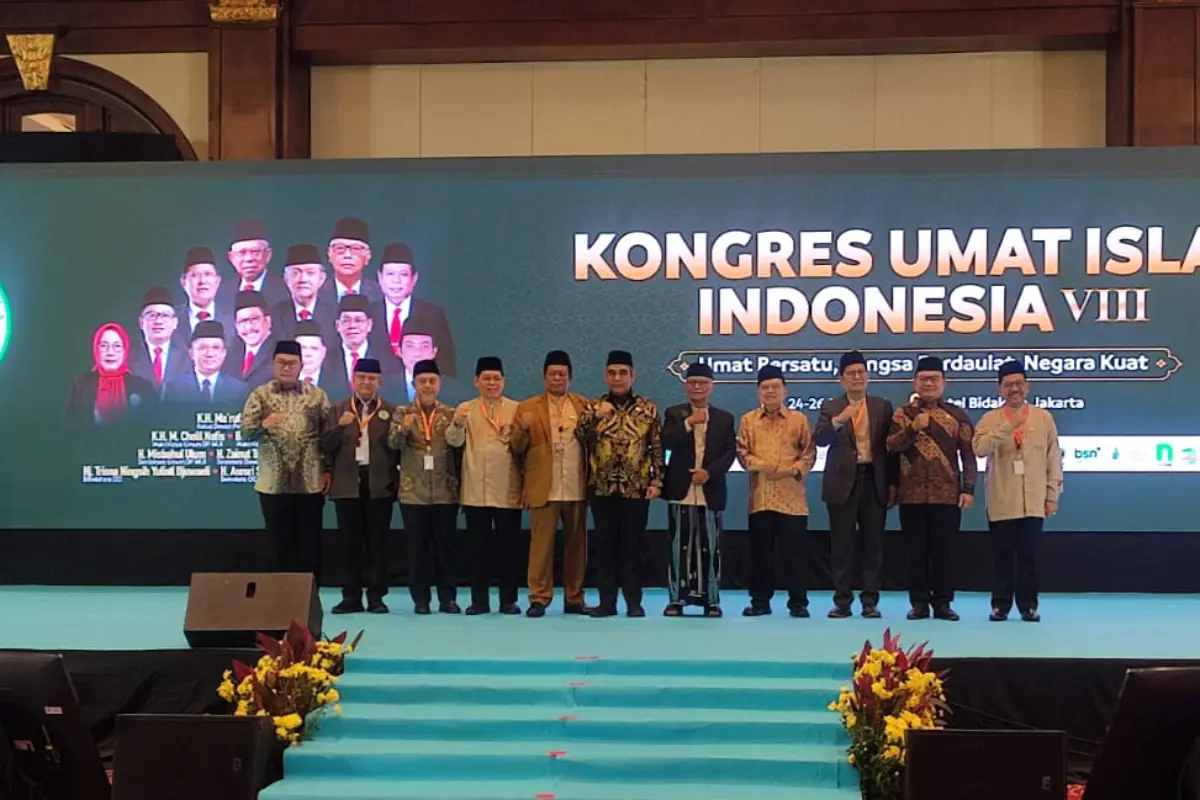
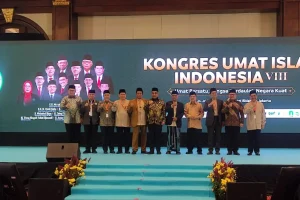
This is exactly where we find the connection to the VIII Indonesian Islamic Congress, held in Jakarta on July 24-26, 2026. This congress was not just a routine meeting of scholars and community leaders. It was a space for deep deliberation, a place to examine the challenges facing the nation and the world through the lens of the Qur’an.
The recommendations that came out of this congress, known as the Taujihat, show that the ummah is now focusing on big, strategic issues that will shape the future of our civilization. These are not just technical debates or small-scale problems. They are about the direction we are heading as a community.
KUII itself has a long and meaningful history. The very first congress was held back in 1921 in Cirebon. It was created as a way for Islamic organizations across Indonesia to come together, strengthen ties, and find common ground on important issues.
Read Also: Abu Ayyub Al Anshari, the Inspirer of Constantinople’s Liberation
This year, KUII turned its attention to some of the most pressing issues facing the ummah today: supporting Palestine’s struggle, uniting the ummah, fighting corruption, strengthening Islamic economics, and addressing moral challenges like LGBT.
Palestine: A Test of Conscience and Faith
Out of the twelve taujihat produced by KUII VIII, the issue of Palestine received special attention. This is not surprising. Since the very beginning, standing up for Palestine has been one of the things that unites Islamic organizations across Indonesia. No matter how much they might disagree on other matters, whether in fiqh or politics, support for Palestine has always been a point of unity.
In its taujihat, KUII VIII made it clear that Indonesia must strengthen its political, diplomatic, humanitarian, and economic support for the Palestinian people. The congress also urged the government to stay consistently at the forefront of the struggle for Palestinian independence, just as the 1945 Constitution’s preamble mandates.
Read Also: Sa’ad bin Abi Waqqash, the First Islamic Archer and Inhabitant of Heaven
This shows that Palestine is not just seen as a geopolitical conflict. It is a matter of justice. It is a humanitarian issue. And for Indonesia, it is also a constitutional duty.
Islamic law teaches us that defending an occupied land is a collective responsibility of the Muslim ummah, each according to their ability. When a people are stripped of their rights and dignity, standing up for them is not just a political choice. It is a commitment to justice and humanity.
That is why support for Palestine cannot stop at nice words or expressions of sympathy. It has to translate into real, concrete actions, whether by individuals, organizations, or the state.
Our founding fathers made it crystal clear in the 1945 Constitution that independence is the right of every nation, and colonialism must be abolished because it goes against humanity and justice. So the KUII VIII Taujihat are really just reinforcing a commitment that has been part of Indonesia’s DNA from the very beginning.
Read Also: Once Again, Indonesia-Palestine Relations
Unity: An Agenda That Never Gets Old
Alongside Palestine, KUII VIII placed a strong emphasis on the unity of the ummah. This choice reflects a simple but powerful truth: no matter how great our potential as Muslims, it all falls apart if we are divided by internal conflict.
Of course, unity does not mean erasing all differences. Differences of opinion have been around since the time of the Prophet’s Companions. What we need to avoid is letting those differences turn into hostility and mutual accusations that destroy the bonds of ukhuwah (brotherhood).
The great Islamic reformer from Egypt, Muhammad Rasyid Ridha, may Allah have mercy on him, identified five main causes of division among Muslims.
Read Also: KUII For Whom? A Critical Reflection on the 8th Indonesian Muslim Congress
First, politics and the struggle for power. Second, tribalism and ethnocentrism. Third, sectarian disputes, whether over core beliefs or secondary matters of fiqh. Fourth, speaking about religion based purely on personal opinion. And fifth, the provocations of Islam’s enemies.
So when the KUII VIII Taujihat call on all parts of the ummah to strengthen ukhuwah, we should take it seriously and act on it. Unity is not about making everyone think the same way. It is about aligning our goals and working together toward what truly matters.
This is where the spirit of ulul albab really shines. People of understanding can tell the difference between core issues that need to be fought for together and secondary matters that can be approached with tolerance and open-mindedness.
Major Corruptors Deserve the Strongest Punishment
Read Also: Football, Religion, and Solidarity with Palestine
One of the most talked-about recommendations from KUII VIII was the call for harsh punishment for major corruption offenders, including the possibility of the death penalty for high-level corruptors.
Behind this recommendation is a powerful message: corruption is not just a legal problem. It is a moral failure. It is a betrayal of trust. And it threatens the future of our nation.
The state needs law enforcement that makes people think twice before stealing public money. And society needs moral education that teaches us that holding a position is a trust, not an opportunity to get rich.
Corruption is different from ordinary theft. The money that is stolen was meant for the public, for schools, hospitals, roads, and services. When that money disappears, the damage to society is massive and widespread.
Read Also: The Sacrifices of Gaza’s Fighters for the Common Good
Prof. Wahbah az-Zuhaili, may Allah have mercy on him, a contemporary Islamic legal scholar, explains in his work that ta’zir (discretionary) punishment can be elevated to the death penalty when a crime causes extensive harm to society. But only when it is seen as the last resort to protect the public interest and prevent similar crimes from happening again.
At the same time, any severe punishment must be handed down through fair, transparent legal processes, with strong evidence and full respect for the rights of the accused.
Protecting Human Nature from LGBT
KUII VIII also addressed the issue of LGBT, which it views as contrary to human nature, Islamic teachings, and the moral values that Indonesian society holds dear.
Read Also: My House is Blocked by the Israeli Yellow Line
Prof. Yusuf al-Qaradawi, in his well-known book “Al-Halal wal Haram fil Islam,” explains that Islam honors humanity by establishing rules that protect lineage and honor. Any deviation from that is clearly against Islamic principles.
At the same time, the Islamic approach to dealing with such deviations is one of wisdom and compassion. Dialogue, education, counseling, and support are the first steps before more decisive action is taken.
Combating LGBT should be understood as part of our broader effort to protect the nation’s moral fabric. Strong families, good character education, healthy social environments, and the strengthening of religious values are our main defenses against the moral challenges of the globalized world.
In line with this, the government issued Presidential Regulation Number 111 of 2025 on National Defense Policy for 2025-2029, which classifies the spread of LGBTQ culture as a non-military threat to national resilience, alongside drug abuse, gambling, radicalism, and terrorism.
Read Also: Azerbaijan’s Mine Action Efforts: Clearing the Path for Recovery and Development
The Indonesian Ulema Council (MUI) has also submitted academic studies and a draft bill on LGBT countermeasures to the House of Representatives as part of efforts to protect family resilience and social order.
But this task does not fall on the ulema alone. Parents, teachers, the government, the media, and all parts of society have a role to play. Protecting human nature means protecting the future of our civilization.
Building the Ummah’s Economic Independence
Strengthening the ummah’s economy was another key priority at KUII VIII. The congress called for the development of Islamic economics, the strengthening of ummah-based economic institutions, and a review of national economic policies to ensure they align with sharia principles, including exploring ideas like Sharia Danantara.
Behind this is a simple but powerful insight: da’wah cannot survive on spirit alone. It needs a solid economic foundation.
History teaches us this lesson clearly. In the early days of da’wah in Makkah, the Prophet Muhammad, peace be upon him, faced enormous pressure. But even in those difficult times, the da’wah was supported by Companions who had economic strength.
Lady Khadijah, may Allah be pleased with her, was a wealthy merchant who became a pillar of strength for the da’wah. Abu Bakar, may Allah be pleased with him, spent his entire fortune for the cause. Uthman, may Allah be pleased with him, bought the Rumat Well (بئر رومة) and made it available to the public for free. Abdurrahman bin Auf, may Allah be pleased with him, was a successful businessman who funded many da’wah missions. These and other wealthy Companions, may Allah be pleased with them all, played a crucial role in the struggle.
The African scholar Malik bin Nabi, may Allah have mercy on him, in his work Syuruthun Nahdhah, argued that the rise of a civilization requires a synergy between people, ideas, and capital. It is almost impossible for the Muslim ummah to overcome backwardness if it remains stuck as a consumer society, while the productive sectors, investment, technology, and economic networks are controlled by others.
His analysis feels incredibly relevant today. In many countries, including Indonesia, we have not fully harnessed our economic potential. Strategic industries, research, and technology are still underdeveloped. As a result, many educational, da’wah, and social service programs run on limited resources.
Strengthening the ummah’s economy is not just about individual prosperity. It is about building the independence of Islamic institutions, including pesantren, schools, hospitals, Islamic media, and da’wah organizations, so they can carry out their missions sustainably.
And it is not just about rebranding conventional systems with Islamic labels. It is about building a genuine Islamic economic system that upholds justice, transparency, and a true commitment to the broader welfare of the people.
وَاللَّهُ أَعْلَمُ بِالصَّوَاب
Mi’raj News Agency (MINA)

















 Mina Indonesia
 Mina Arabic
 Mina Sport
