





By Imaam Yakhsyallah Mansur
بِسْمِ اللَّهِ الرَّحْمَنِ الرَّحِيمِ
Allah Subhanahu wa Ta’ala says:
وَقَالَ الَّذِيْنَ كَفَرُوْا لَا تَسْمَعُوْا لِهٰذَا الْقُرْاٰنِ وَالْغَوْا فِيْهِ لَعَلَّكُمْ تَغْلِبُوْنَ ٢٦ (فصّلت [٤١]: ٢٦)
Read Also: Gaza’s Suffering That Moves the World’s Conscience
“Those who disbelieve say, ‘Do not listen to this Qur’an and make noise during it, that you may overcome [them].'”(Surah Fushilat [41]: 26)
Imam At-Tabari (may Allah have mercy on him) explained that this verse came down when the Prophet Muhammad ﷺ recited the Qur’an in front of the Quraysh polytheists. Their response? They started whistling and clapping, anything to drown out the message.
That wasn’t just a random outburst. It was a calculated move to distract people from the truth being spoken.
And that pattern hasn’t disappeared. It repeats itself throughout history. Every time truth is presented, there’s almost always someone trying to drown it out with noise.
Read Also: The Profound Meaning of the Prophet’s Hijrah, A Journey of Faith and Civilization
Today, however, the noise is more subtle but far more powerful. It’s not about whistling anymore. It’s about endless information, flashy entertainment, and massive global events that consume our attention.
That’s where the World Cup fits in. It’s not just a sporting event. It’s a global wave of hype that pulls millions into cheers, debates, and emotional highs.
And when the world is glued to stadiums and screens, issues like Palestine quietly slip to the sidelines. That’s where the Qur’anic concept of laghw vain distraction that comes into sharp focus.
When the World Is Fixated on a Ball
Read Also: Why Do People Cry Easily When Reading the Quran?
Screens light up everywhere. From European capitals to Middle Eastern cities, from Asia to Africa, people hit pause on their daily lives. Cafes overflow, living rooms turn into viewing parties, street stalls set up projectors, and public squares fill with crowds staring at one thing: the World Cup.
For many, it’s more than a tournament. It’s an event that captures global attention like few others. People drift into a wave of euphoria that crosses language, culture, and borders.
But behind the roar, there are places that don’t cheer. There are lives that can’t pause just because the world is celebrating.
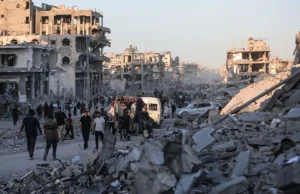
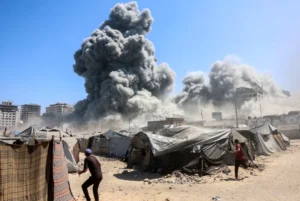
Palestine exists in a different reality. Its fate isn’t decided by match scores, but by daily survival in an unending struggle.
Read Also: Debunking Zionist Myths and Falsehoods
There, children grow up without certainty. Families live with repeated loss. Communities fight for basic needs like water, food, and medicine.
This contrast forces a hard question: how can we be so fixated on entertainment while real, ongoing suffering slowly fades from our awareness?
Palestine is one of the clearest examples of this global attention gap. We react quickly to match results, but our response to humanitarian crises often moves at a snail’s pace.
There’s nothing wrong with enjoying sports or entertainment. But it becomes dangerous when that enjoyment dulls our sensitivity to others’ pain.
Read Also: Learn from Prophet Yusuf about Food Security Management During the Extreme Climate Crisis
Don’t Let Entertainment Override Compassion
Islam is a practical faith. It acknowledges human nature. We enjoy beauty, pleasure, and harmony and that’s okay, as long as it’s obtained through good means and used responsibly.
Entertainment is allowed, even encouraged but in balance. Islam sets boundaries: no harm, no exposure of private parts, no magic, no injustice, no gambling, and no excess.
Life, after all, is about responsibility. How we manage our time, attention, and wealth matters.
Read Also: After Ramadan: 10 Recommended Sunnah Acts in the Month of Shawwal
In today’s world, the World Cup is a massive economic, social, and cultural machine. Millions travel across borders just to watch matches live. It’s one of the largest movements of people for any single event.
In Saudi Arabia, there was talk of about one million Arab fans traveling to the US for the tournament. Even as an estimate, it shows the massive human flow driven by one sporting event.
If a single fan spends around Rp200 million on travel, accommodation, tickets, and other costs, the total could reach hundreds of trillions in rupiah.
That number isn’t meant to shame anyone. It’s meant to make us reflect: where are our collective priorities?
Read Also: Women Reciting Qur’an Use Speakers, Is It OK?
Imam Al-Ghazali reminded us that we’ll be asked about our time and wealth. He said major sins often come from habits that distract us from worship and struggle.
Ibn Taymiyyah added that anything that distracts us from our core duties to Allah and to others can be a form of misaligned priority, even if it’s not outright forbidden.
Islam teaches balance. It doesn’t ban entertainment, but it reminds us not to let it overshadow our duties or numb our empathy. The real danger isn’t the entertainment itself, it’s when it erodes our care for those who are suffering.
Match Schedules Shouldn’t Replace Worship
Read Also: The Habit of Reading Qur’an Promotes Health, Here Is the Scientific Explanation!
One thing often overlooked is how match schedules mess with our daily rhythms. Games run late into the night, shifting sleep patterns, daily routines, and, for many, time for prayer.
If you can stay up to watch a match, don’t let that come at the cost of Fajr or night prayer. This is where priorities are tested.
In Islam, prayer is not just a ritual. It’s the foundation of a servant’s connection to their Lord. It’s what keeps a believer grounded amidst the distractions of life.
Ibn Rajab al-Hanbali called night prayer a special act of closeness to Allah.
Read Also: Health Benefits of Breaking Fast With Water and the Recommended Intake
But ironically, during these spiritually valuable hours, our attention often goes to matches while the call to stand before Allah goes unanswered.
The real test is this: if you can spend hours watching football, can you not spare a few minutes for prayer?
During the World Cup, a believer is called to be more than just a passive viewer. They must guard their spiritual awareness.
The measure of life isn’t how many matches you watch, but how strong your connection is with your Lord.
Read Also: The Purpose of Fasting in Ramadan is Taqwa
The World Cup as an Opportunity for Da’wah
The World Cup is also a huge opportunity. It’s not just a stage for entertainment it can be a platform for da’wah and awareness.
The 2022 World Cup in Qatar was a great example. For the first time, the tournament was hosted in a Muslim-majority country. Islamic values and symbols were more visible on the global stage from cultural introductions to worship facilities to Qur’an distributions.
The Qatar Islamic Information Center (FANAR) reported that hundreds of foreign visitors embraced Islam during the tournament.
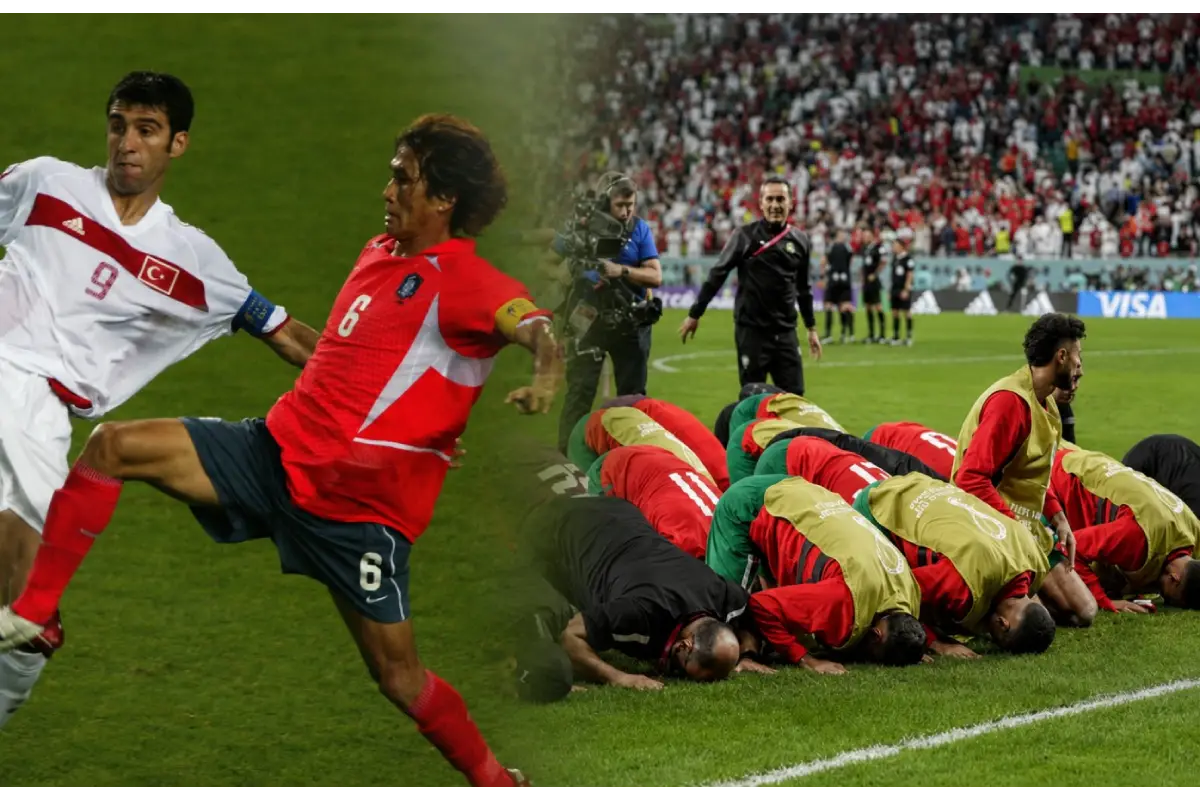
We also see spiritual moments on the pitch. Muslim players pray before matches, perform prostrations of gratitude after goals, and hold onto their religious identity under pressure.
In some moments, symbols of solidarity with Palestine have also appeared flags, gestures, and messages spreading across social media.
So watching the World Cup doesn’t have to be just about entertainment. It can be a space to revive empathy for those whose suffering isn’t captured by the cameras.
The World Cup will come and go. The cheers will fade. Champions will change. But one thing must remain: solidarity for those who need it most.
Palestine is not a temporary trend. It’s a long, ongoing reality that demands our attention, prayers, and care that undiminished by time, unshaken by entertainment, and undrowned by the noise of passing celebrations.
وَاللَّهُ أَعْلَمُ بِالصَّوَابِ.[]
Mi’raj News Agency (MINA)










![Security forces take measures as protesters gather outside Woolwich Crown Court to show support for a group known as the “Filton 24,” whose trial is ongoing over a protest at an Israeli defense company’s facility in Bristol in 2024 in London, United Kingdom on June 12, 2026. [Aysu Biçer – Anadolu Agency]](https://en.minanews.net/wp-content/uploads/2026/06/Screenshot_2026-06-13-17-48-18-76_40deb401b9ffe8e1df2f1cc5ba480b12-300x194.jpg)


 Mina Indonesia
 Mina Arabic
 Mina Sport