







By Imam Yakhsyallah Mansur
Allah Subhanahu wa Ta’ala says:
لَا يُكَلِّفُ اللَّهُ نَفْسًا إِلَّا وُسْعَهَاۗ لَهَا مَا كَسَبَتْ وَعَلَيْهَا مَا اكْتَسَبَتْۗ …. (Al-Baqarah [2]: 286)
“Allah does not burden any soul beyond its capacity. It shall have what it has earned, and it shall bear what it has earned.” (Surah Al-Baqarah [2]: 286)
Read Also: Remembering the 1969 Al-Aqsa Mosque Arson: A Tragedy That United the Muslim World
This verse lays down a fundamental principle in Islam: no trial is ever placed upon a person unless they are able to bear it. Every event that unfolds does so through Allah’s infinite knowledge, absolute justice, and boundless mercy.
Imam At-Tabari, may Allah have mercy on him, explained that the word “وُسْعَهَا” refers to the actual limit of what a person can truly endure. Every religious duty and every test in life has been perfectly calibrated to match each individual’s capacity.
The verse also reveals that Islamic law is built on ease, not hardship. Mistakes made out of forgetfulness, confusion, or genuine inability are met with leniency, while every good deed, no matter how small, is faithfully rewarded.
When someone gives their absolute best to fulfill a responsibility, yet still encounters obstacles beyond their control that they are not held accountable for what they could not avoid.
Read Also: Abu Ayyub Al Anshari, the Inspirer of Constantinople’s Liberation
Allah does not merely look at the final outcome; He weighs the sincerity of intention, the seriousness of effort, and the piety that drives every action. A believer is therefore called to give their utmost, then place their trust in Allah’s decree and find peace in it.
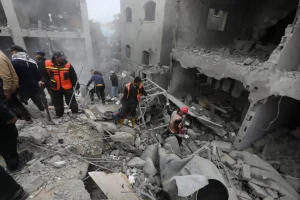
This verse offers a powerful lesson when viewed through the lens of the Palestinian people’s struggle. For decades, they have endured unimaginable hardship: occupation, war, the loss of loved ones, and the destruction of homes and livelihoods.
None of this is easy. But as people of faith, they continue to push forward with all their strength, fully aware that the final outcome rests with Allah SWT.
The same applies to everyone involved in the Palestinian cause. Whether through humanitarian work, diplomacy, reconciliation, or any other avenue, every effort is ultimately directed toward a shared goal: freedom, liberation from the Zionist occupation, and the restoration of Al-Aqsa Mosque to the Muslim Ummah.
Read Also: Sa’ad bin Abi Waqqash, the First Islamic Archer and Inhabitant of Heaven
What True Victory Really Means
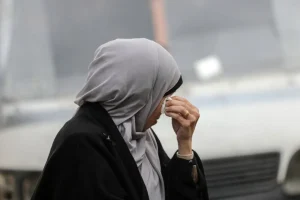
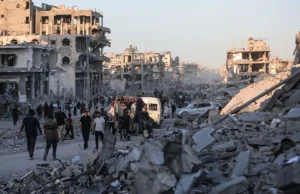
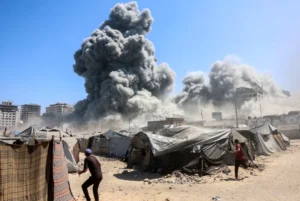
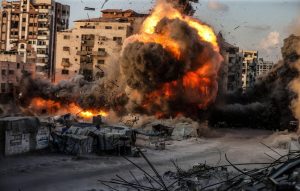
Nobody in Gaza wants war. Behind every explosion, there is a mother clutching her child in fear, a father staring helplessly at the ruins of his home, and children growing up with little reason to hope.
For the people of Gaza, war is not a headline or a statistic. It is a harsh, painful reality they live every single day.
Amid this prolonged suffering, the average civilian is not preoccupied with political power struggles. Their most urgent concerns are far simpler: when will the violence stop? When will aid finally reach them? When can life return to some semblance of normalcy?
Read Also: Reading 8th Indonesian Islamic Congress’ Taujihat Through the Lens of Ulul Albab
It is in this context that recent political developments in Gaza deserve closer attention. Hamas has announced that it will hand over civilian administration to the National Committee for Gaza Administration (NCAG).
Opinions on this move may vary, but it raises a fundamental question: Is relinquishing control a sign of defeat, or is it a strategic step to create space for recovery and the rebuilding of community life in Gaza?
Sacrifice Takes Many Forms
History reminds us that there are forms of sacrifice just as heavy as falling on the battlefield—one of them is letting go of a deeply held ideal for the sake of a greater good.
Read Also: Once Again, Indonesia-Palestine Relations
For a true fighter, power is never the end goal; it is merely a tool to serve the people. A genuine fighter is not someone who sacrifices the masses to hold onto authority. Rather, it is someone who places the safety and well-being of the people above personal or factional interests.
In Islamic teachings, leadership is not a prize to be fought over, it is a trust that will be accounted for before Allah Subhanahu wa Ta’ala. The Prophet Muhammad ﷺ said:
كُلُّكُمْ رَاعٍ، وَكُلُّكُمْ مَسْئُولٌ عَنْ رَعِيَّتِهِ،… (رواه البخارى)
“Each of you is a shepherd, and each of you will be questioned about those under your care.” (Narrated by Al-Bukhari)
Read Also: KUII For Whom? A Critical Reflection on the 8th Indonesian Muslim Congress
This hadith makes it clear that a leader’s success is not measured by how long they remain in power, but by how well they protect and provide for those entrusted to them.
Al-Ghazali, in his Ihya’ Ulum al-Din, observed that when power becomes an end in itself, the trust it represents loses its soul. A leader’s moral legitimacy comes from their commitment to the public good, not their ability to cling to office.
Since 2006, Gaza has lived through an unrelenting series of ordeals: a suffocating blockade, restricted access to basic necessities, repeated military assaults, and the systematic destruction of infrastructure.
In such a setting, Palestinian civilians face an immense challenge: preserving social cohesion, meeting basic needs, and navigating a constantly shifting security landscape all at once.
Read Also: Football, Religion, and Solidarity with Palestine
Under these circumstances, every political decision carries enormous weight. There are no easy answers. No path comes without consequences.
There are moments when a fighter’s courage is shown on the front lines. But there are also moments when courage means making deeply unpopular decisions—decisions that may cost them politically but could save lives and preserve the future of their people.
A Lesson from the Treaty of Hudaybiyyah
The Treaty of Hudaybiyyah offers a powerful example. In the sixth year of Hijrah, the Prophet Muhammad ﷺ and some 1,400 companions set out for Makkah to perform Umrah, only to be blocked by the Quraysh.
Read Also: My House is Blocked by the Israeli Yellow Line
Negotiations followed, resulting in an agreement that seemed heavily tilted against the Muslims. Among its terms, they had to postpone Umrah for a full year. Some clauses appeared to favor the pagan Quraysh outright.
Umar bin Khattab, may Allah be pleased with him, was among those who questioned the Prophet ﷺ, struggling to see the wisdom behind the deal.
Yet what initially looked like a setback turned out to be a masterstroke. Within two years of Hudaybiyyah, the number of people embracing Islam surged, and Makkah was ultimately liberated with barely any bloodshed.
The victory, it turned out, was not military but strategic—one that brought social stability and opened the door for peaceful da’wah and expanded relations with other communities.
Read Also: Azerbaijan’s Mine Action Efforts: Clearing the Path for Recovery and Development
Allah Himself described the Treaty of Hudaybiyyah as a “clear victory” (QS Al-Fath [48]: 1) because its long-term benefits far outweighed what was visible at the surface. Ibnul Qayyim, in Zad al-Ma’ad, explained that the Prophet’s decision reflected the wisdom of a leader who could see beyond the immediate moment to the greater good—even when his companions could not.
Of course, the context of Hudaybiyyah is not identical to the current situation in Palestine. But the underlying principle remains relevant: sometimes, a leader must take difficult steps if they believe those steps will reduce suffering and open up new possibilities for the future.
Putting the Common Good First
Edward Said, in The Question of Palestine, reminded us that conflict cannot be resolved through military might alone. A lasting peace can only be built on justice, dignity, and the recognition of Palestinian rights.
Read Also: Debunking Zionist Myths and Falsehoods
This is where sacrifice takes on a deeper meaning. It is not only about facing the enemy in battle; it is also about putting the community’s welfare ahead of personal or factional interests when every choice comes with a heavy price.
In Gaza, millions of ordinary people have paid an unbearable price for decades of conflict. They need security. They need healthcare, education, jobs, and a chance to rebuild.
Reconstructing buildings is essential, but reconstructing trust among Palestinians themselves is even more critical. Unity among factions, accountable governance, and a genuine commitment to the people’s welfare must serve as the foundation for any stable future.
The road to a more peaceful life depends not only on international aid or physical reconstruction. It depends on the willingness of all parties to place the people’s interests above their own political ambitions.
If that spirit can take root, then the sacrifices made by so many Palestinian families over the years will not have been in vain. Out of the rubble, a new hope can emerge a hope for a more united, more resilient, and more dignified future.
The coming generations will remember those who stayed true to the common good. A sacrifice born of sincerity will outlast any government, any administration, and any fleeting political victory.
The greatest victory is not the one that keeps you in power. It is the one that keeps hope alive. And it is that hope that will sustain a people’s struggle until justice finally prevails.
The late Bosnian president and thinker Alija Izetbegović once wrote that civilization is not built by military victories alone, but by the ability to preserve a nation’s moral integrity and its people’s hope even in the darkest times.
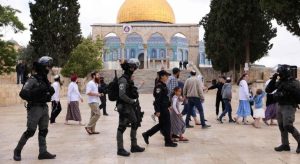
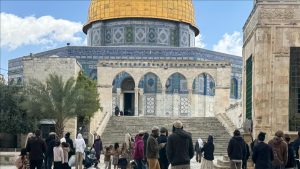
For the Palestinian people, the struggle will continue until they achieve freedom and Al-Aqsa Mosque is returned to the Muslim Ummah. And Muslims everywhere have a duty to stand with them, as an expression of Islamic brotherhood (ukhuwah Islamiyah) and as a defense of their first qibla, the holiest site after the Sacred Mosque (Al-Masjid Al-Haram) and the Prophet’s Mosque (Al-Masjid An-Nabawi).
وَاللَّهُ أَعْلَمُ بِالصَّوَابِ
Mi’raj News Agency (MINA)





 Mina Indonesia
 Mina Arabic
 Mina Sport