




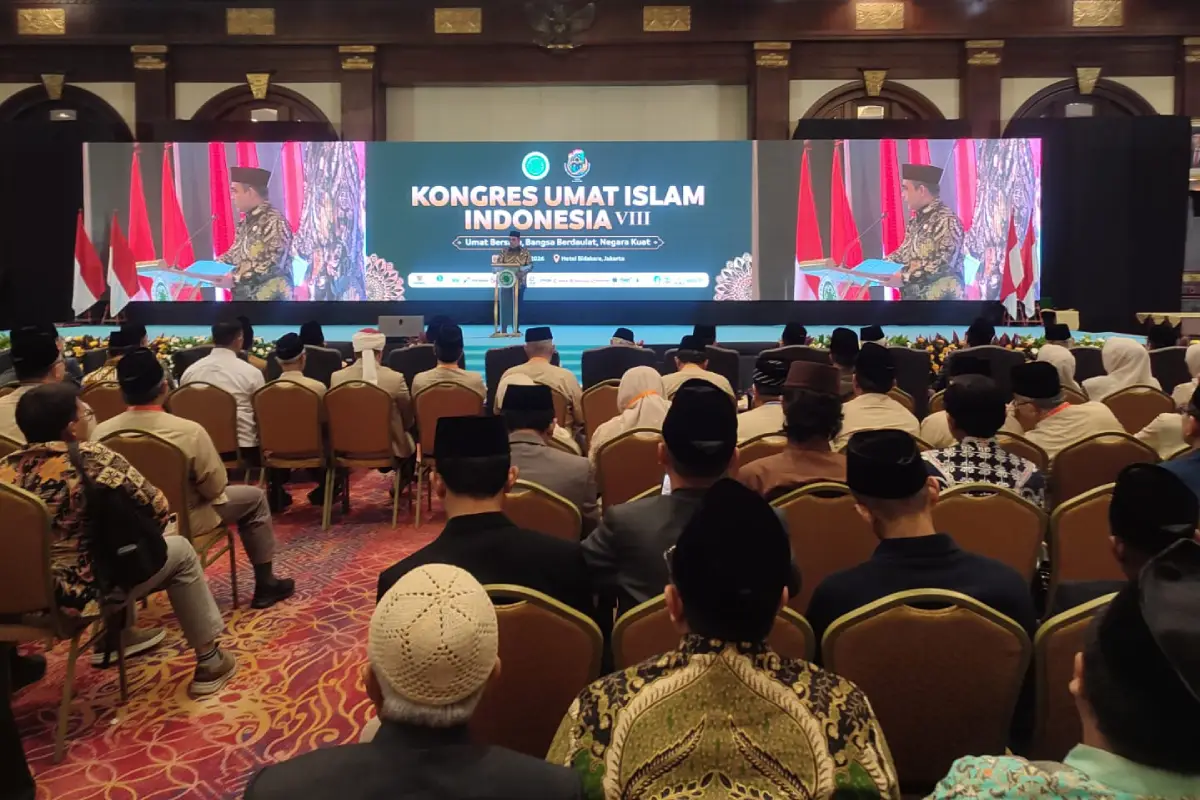
Jakarta, MINA – The 8th Indonesian Muslim Congress (KUII) concluded with a strong message that Indonesia must chart a wise and principled course through the intensifying global rivalries shaking the world.
The congress, held from July 24 to 26, 2026, brought together Islamic leaders, scholars, and policymakers to reflect on the nation’s role amid rising geopolitical tensions.
A central theme of the discussions was the growing competition between major powers. Participants noted that Indonesia finds itself right in the middle of the United States, China, and Russia’s strategic contests.
The aggressive foreign policies of the US under President Donald Trump, China’s expanding influence through the Belt and Road Initiative and its claims in the South China Sea, and Russia’s geopolitical ambitions are seen as threats that could undermine Indonesia’s sovereignty, economic stability, and cultural identity.
Read Also: PBNU Makes 2026 Santri Day a Momentum for Palestine Solidarity
The congress also highlighted how distant conflicts have direct, tangible effects on Indonesians. For example, the US-Israeli strikes against Iran have not only destabilized the Middle East but also triggered volatility in global energy markets, leading to rising fuel prices and inflation back home.
This, the participants stressed, makes regional stability a domestic issue, reinforcing the need for Indonesia to maintain an active and principled foreign policy.
Indonesia’s traditional “free and active” foreign policy philosophy came under the spotlight. The congress emphasized that this approach is not about being neutral or passive but about exercising full sovereignty to promote peace and justice.
While the policy faces significant pressure from competing blocs, the KUII stressed that Indonesia must not become a mere pawn in the games of great powers. Instead, it should be an active player shaping a more just global order.
Read Also: Magnitude 5.9 Earthquake Strikes Aceh Jaya; Tremors Felt in Several Areas
A key call to action from the congress was the urgent need to reform the international system. Participants criticized the United Nations Security Council’s veto power, describing it as a “parody of justice” that often paralyzes humanitarian action and protects aggressors from accountability.
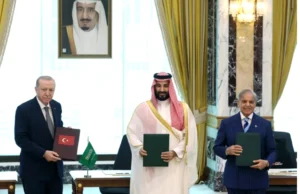
It was argued that the global power structure established in 1945 is outdated and needs to be reformed to reflect the realities of 2026. Indonesia, along with other nations like Turkey, Saudi Arabia, Brazil, India, and South Africa, was urged to take a leading role in pushing for a more multipolar world, empowering organizations like the OIC, ASEAN, BRICS, and the African Union to act as effective counterweights.
In conclusion, the KUII 2026 called for a new, collaborative world order grounded in mutual respect, humanity, and justice. It urged all components of the Indonesian nation, from the government to civil society, academics, and the youth to strengthen their geopolitical literacy and work together to ensure that Indonesia is not a spectator but a protagonist in building a better future for the world.[]
Mi’raj News Agency (MINA)
Read Also: Coordinating Minister Bahlil to Soon Announce Results of Trial for 3kg LPG Substitute










 Mina Indonesia
 Mina Arabic
 Mina Sport