







By Imaam Yakhsyallah Mansur
بِسْمِ اللَّهِ الرَّحْمَنِ الرَّحِيمِ
Allah Subhanahu wa Ta’ala says:
وَالْمُؤْمِنُونَ وَالْمُؤْمِنَاتُ بَعْضُهُمْ أَوْلِيَاءُ بَعْضٍ ۘ يَأْمُرُونَ بِالْمَعْرُوفِ وَيَنْهَوْنَ عَنِ الْمُنكَرِ وَيُقِيمُونَ الصَّلَاةَ وَيُؤْتُونَ الزَّكَاةَ وَيُطِيعُونَ اللَّهَ وَرَسُولَهُ ۚ أُولَٰئِكَ سَيَرْحَمُهُمُ اللَّهُ ۗ إِنَّ اللَّهَ عَزِيزٌ حَكِيمٌ (التوبة [٩]: ٧١)
Read Also: Remembering the 1969 Al-Aqsa Mosque Arson: A Tragedy That United the Muslim World
“The believing men and believing women are allies of one another. They enjoin what is right and forbid what is wrong, establish prayer, give zakah, and obey Allah and His Messenger. Those are the ones upon whom Allah will have mercy. Indeed, Allah is Exalted in Might and Wise.” (QS At-Taubah [9]: 71).
This verse highlights the core character of the Muslim community as one body, strengthening and helping one another. The word ‘auliya’ in this verse means helpers, protectors, and those who show loyalty in goodness.
Ibn Kathir, in his *Tafsir al-Qur’an al-‘Azim*, explains that the bond of faith creates solidarity, compassion, and shared responsibility among believers. A believer cannot be indifferent to the suffering of their brothers and sisters, because faith demands care and solidarity.
Similarly, Al-Qurtubi, in his book *Al-Jami’ li Ahkam al-Qur’an*, explains that this verse serves as an important foundation for the obligation to enjoin good and forbid evil in the life of the Muslim community.
Read Also: Abu Ayyub Al Anshari, the Inspirer of Constantinople’s Liberation
The unity of Muslims is not just a symbol of identity; it must be realized through real actions: defending the oppressed, helping the weak, and bringing benefit to others. Brotherhood in Islam should not stop at words and slogans. It must be visible in a real commitment to justice.
When fellow believers are colonized, killed, and driven from their land, Muslims around the world have a moral and spiritual responsibility to help them according to their capacity.
This verse becomes especially relevant when we consider the Nakba tragedy in Palestine. Since 1948, the Palestinian people have experienced mass expulsion, loss of homeland, destruction of villages, and a long life in refugee camps. To this day, that suffering continues.
The Wounded Land of Palestine
Read Also: Sa’ad bin Abi Waqqash, the First Islamic Archer and Inhabitant of Heaven
Palestine is the land of the prophets, the birthplace of a long history of human civilization, and the home of Al-Aqsa Mosque, the first qibla of Islam. For centuries, Palestine was home to communities of different faiths and cultures living together. But in the last century, that land has turned into a symbol of ongoing human suffering.
The crisis in Palestine over the past eight decades goes far beyond geopolitics. Palestine is a long story of expulsion, colonization, loss of homeland, destruction, and the denial of basic human rights.
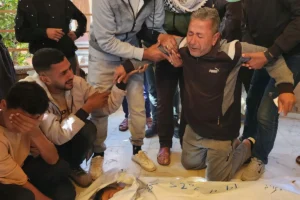
For Palestinians, the Nakba is a wound passed down from generation to generation. Palestinian children today still live in the same fear that their grandparents experienced decades ago. Their homes are destroyed, their land is stolen, and the sound of explosions is still part of their daily lives.
Nakba (النكبة) means “great catastrophe.” It refers to the events of 1948, when more than 700,000 Palestinians were driven from their homeland following the establishment of the Zionist state of Israel. Hundreds of villages and farms were destroyed, thousands of civilians were killed, and millions have lived as refugees ever since.
Read Also: Reading 8th Indonesian Islamic Congress’ Taujihat Through the Lens of Ulul Albab
The Historical Background of the Nakba
Before 1948, Palestine was a peaceful land where people of different religions and cultures lived together. Muslims, Christians, and Jews lived side by side in cities like Jerusalem, Haifa, Jaffa, and others.
Major changes began after the issuance of the Balfour Declaration. In that declaration, the British government expressed support for the establishment of a “national home for the Jewish people” on the land of the Palestinian people.
According to Palestinian historian Walid Khalidi, the Balfour Declaration was not just a British diplomatic document; it was the political door that opened the way for Zionist colonization of Palestinian land in the 20th century.
Read Also: Once Again, Indonesia-Palestine Relations
Meanwhile, Israeli historian Ilan Pappe, in his book *The Ethnic Cleansing of Palestine*, states that the expulsion of Palestinians in 1948 was not just a consequence of war, but part of a structured, massive, and systematic process of ethnic cleansing.
After the Balfour Declaration, European Jewish migration to Palestine increased sharply. Tensions began to rise between the native Palestinian population and the Zionist groups arriving with Western political and military support.
The Ongoing Suffering of Palestine to This Day
To this day, millions of Palestinian refugees are scattered across Jordan, Lebanon, Syria, Gaza, and the West Bank. They live in refugee camps in very poor conditions. Generation after generation is born as refugees, never having seen the land of their ancestors.
Read Also: KUII For Whom? A Critical Reflection on the 8th Indonesian Muslim Congress
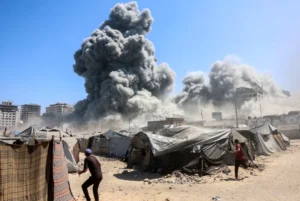
In Gaza, the blockade and genocide that have gone on for years have caused a prolonged humanitarian crisis. This small area, home to more than two million people, is often described as the “largest open-air prison in the world.”
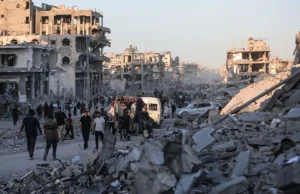
Access to food, electricity, fuel, and medicine is very limited. Repeated Israeli Zionist military attacks have killed hundreds of thousands of people and destroyed hospitals, schools, and civilian infrastructure.
In the West Bank, land theft continues through the construction of illegal Israeli Zionist settlements. Palestinians face military checkpoints, movement restrictions, and arrests without due process. Palestinian children and women are not spared from arrest and detention without trial. International human rights organizations have repeatedly criticized these practices.
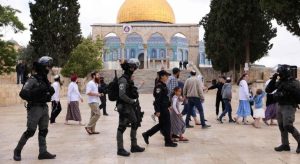
Al-Aqsa Mosque has also witnessed the suffering and helplessness of Muslims and the Palestinian people. Restrictions on worship, police raids, and provocative acts by extremist Jewish groups often trigger tensions. Palestinian scholar Sheikh Ekrima Sabri has repeatedly stated that Al-Aqsa bears witness to Israeli Zionist brutality against Muslims there.
Read Also: Football, Religion, and Solidarity with Palestine
Thus, the Nakba tragedy truly continues to this day. Modern colonization does not only happen through military force, but also through economic blockades, information control, religious desecration, and efforts to erase Palestine’s historical identity.
How Has the World Responded?
The United Nations has issued hundreds of resolutions concerning Palestine, including UN General Assembly Resolution 194 of 1948, which calls for Palestinian refugees to be allowed to return to their homes and receive compensation. Yet none of these resolutions have ever been enforced. The international community’s inability to uphold justice has left Palestinians living in uncertainty.
Western countries, especially the United States, have for years provided strong political and military support to Israel. This has led to accusations of double standards in human rights issues.
Read Also: The Sacrifices of Gaza’s Fighters for the Common Good
Nevertheless, global solidarity with Palestine continues to grow, especially after the October 2023 attacks. Demonstrations and various peaceful actions in support of Palestine have taken place in cities around the world. Students, academics, human rights activists, and religious leaders are calling for an end to colonization and the killing of civilians. The boycott, divestment, and sanctions (BDS) movement against products supporting Israeli colonization is also growing.
However, many believe that the response from the Muslim world is still not proportionate to the scale of Palestinian suffering. Divisions and national interests often prevent Muslim solidarity from reaching its full potential.
All contemporary scholars agree and affirm that defending Palestine is an obligation for all Muslims. Palestine is not just about an occupied nation; it is a symbol of Muslim honor, a compass for the struggle for justice, and a great trust for which we will be held accountable before Allah.
The Prophet Muhammad ﷺ said:
Read Also: My House is Blocked by the Israeli Yellow Line
لَا تَزُولُ قَدَمَا عَبْدٍ يَوْمَ الْقِيَامَةِ حَتَّى يُسْأَلَ عَنْ عُمُرِهِ فِيمَ أَفْنَاهُ، وَعَنْ عِلْمِهِ فِيمَ فَعَلَ، وَعَنْ مَالِهِ مِنْ أَيْنَ اكْتَسَبَهُ وَفِيمَ أَنْفَقَهُ، وَعَنْ جِسْمِهِ فِيمَ أَبْلَاهُ (رواه الترمذى)
“A person’s feet will not move on the Day of Resurrection until they are asked about four things: their life and how they spent it, their knowledge and how they acted upon it, their wealth and how they earned and spent it, and their body and how they used it.” (Narrated by At-Tirmidhi)
Our first president, Ir. Soekarno, declared: “As long as the independence of the Palestinian people has not been handed over to the Palestinians, the Indonesian nation will stand against Israeli colonization.” This statement proves that solidarity with Palestine is not just a political stance, but a legacy of struggle and a humanitarian calling passed down by Indonesia’s founders.
South African leader Nelson Mandela once said, “Our freedom is incomplete without the freedom of the Palestinians.” This statement shows that the Palestinian struggle is seen as part of the global struggle against colonization.
Read Also: Azerbaijan’s Mine Action Efforts: Clearing the Path for Recovery and Development
With all humility, we state that Indonesia’s duty in filling its independence is not yet complete as long as Palestine is not free. The opening of the 1945 Constitution’s first paragraph affirms that independence is the right of all nations. Therefore, colonialism must be abolished because it is against humanity and justice.
**What Can We Do Today?**
For intellectuals, the main step is to strengthen awareness and education about Palestine. Knowledge of Palestinian history is essential for younger generations to understand the root of the problem objectively. Intellectuals, lecturers, academics, and journalists have a moral responsibility to present accurate information amid the flood of propaganda and disinformation.
The media plays a very important role. Humanitarian journalism needs to be kept alive. Journalists can write articles, books, poetry, documentation, research, and narratives that amplify the voices of the Palestinian people. Colonization is often done not only with weapons but also by controlling the information narrative.
Edward Said, the renowned Palestinian intellectual and author of *The Question of Palestine*, explained how global media and discourse often erase the Palestinian perspective. Therefore, continuously bringing Palestinian voices into public space is part of the struggle to help the Palestinian people.
Boycott movements and moral pressure also need to be strengthened. People can make ethical choices about the products they buy and support peaceful campaigns and human rights advocacy. International public pressure has been proven to play a key role in the struggle against apartheid in South Africa.
Equally important is building unity among Muslims. Palestine must be a unifying issue, not a source of division. Solidarity cannot stop at fleeting emotional moments. It must be realized in a sustainable, organized, and consciousness-based movement.
Palestine is not only a test for its own people but also a test for the conscience of all humanity. Everyone can play a role in this humanitarian struggle. Even small contributions become valuable and noble in the sight of Allah when done with sincerity, togetherness, and consistency (istiqamah).
The Nakba is not just a historical tragedy of the past; it is an ongoing humanitarian wound. Traces of its suffering can still be seen in the eyes of Palestinian children growing up amid war, in the rubble of destroyed homes in Gaza, and in the longing of millions of refugees who have yet to return to their homeland.
We may not be able to stop the war. But whatever contribution we make to Palestine can be part of the greater struggle to abolish colonialism, uphold justice, and promote humanitarian values in the world.
Believe that truth will surely prevail and falsehood will vanish, as Allah says:
وَقُلْ جَاءَ الْحَقُّ وَزَهَقَ الْبَاطِلُ ۚ إِنَّ الْبَاطِلَ كَانَ زَهُوقًا (الاسرآء [١٧]: ٨١)
“And say, ‘The truth has come, and falsehood has perished. Indeed falsehood is ever bound to perish.'” (QS Al-Isra [17]: 81)
This verse is from Surah Al-Isra, which, according to Sayyid Qutb in his book *Fi Dhilal al-Qur’an*, signals the destruction of the Jews. This verse was revealed when Muslims were still weak in Mecca. Yet the Prophet ﷺ and his companions were optimistic that the truth would prevail. Ultimately, that victory came gloriously with the conquest of Mecca (Fathu Makkah).
It was this verse that the Prophet ﷺ recited when he destroyed the idols of the polytheists around the Kaaba. May the victory of the Palestinian people come soon, and may Al-Aqsa Mosque soon be freed. Allahu akbar, Al-Aqsa Haqquna.[]
وَاللَّهُ أَعْلَمُ بِالصَّوَابِ
Mi’raj News Agency (MINA)




![Security forces take measures as protesters gather outside Woolwich Crown Court to show support for a group known as the “Filton 24,” whose trial is ongoing over a protest at an Israeli defense company’s facility in Bristol in 2024 in London, United Kingdom on June 12, 2026. [Aysu Biçer – Anadolu Agency]](https://en.minanews.net/wp-content/uploads/2026/06/Screenshot_2026-06-13-17-48-18-76_40deb401b9ffe8e1df2f1cc5ba480b12-300x194.jpg)



 Mina Indonesia
 Mina Arabic
 Mina Sport