







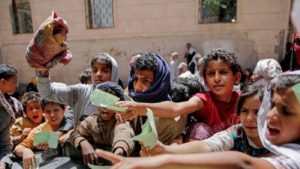
Kaboul, MINA – Nearly 19.2 million people in Afghanistan are projected to face acute food insecurity this winter as funding shortages threaten humanitarian assistance, the United Nations warned Tuesday.
Between September and October, 15.9 million people, or nearly one in three Afghans, were experiencing acute food insecurity at crisis levels or worse, Olga Cherevko, spokesperson for the UN Office for the Coordination of Humanitarian Affairs in Afghanistan, told reporters in Geneva.
She warned that five million people could face emergency levels of hunger this winter.
More than four million children aged between six months and five years are projected to require treatment for acute malnutrition next year, including nearly 1.1 million suffering from severe acute malnutrition, Cherevko said.
Read Also: Over 1.6 Million Children in Yemen’s Taiz Risk Losing Water Access
Approximately one-third of nutrition facilities have closed or suspended services, partly because of funding cuts, further limiting access to essential treatment.
“Once these services disappear, the consequences can be irreversible, especially for children,” Cherevko warned.
Despite improved rainfall and agricultural production, millions of Afghans remain unable to afford sufficient food. Years of conflict, drought and economic hardship have weakened families’ ability to withstand further shocks.
“But one good harvest after several years of drought cannot undo the damage,” she said.
Read Also: Saudi-led Coalition Warns Houthis Against Using Traditional Boats to Smuggle Arms
Cherevko also warned that restrictions on women and girls were aggravating the humanitarian crisis. Citing UNICEF estimates, she said Afghanistan could lose up to 20,000 women teachers and 5,400 female health workers by 2030 if the current restrictions continued.
She called for urgent humanitarian assistance ahead of winter, alongside sustained investment in agriculture, employment, healthcare and economic opportunities for women.
Afghanistan has faced a prolonged humanitarian crisis since the Taliban returned to power in August 2021. The subsequent suspension of international aid and freezing of billions of dollars in assets placed additional pressure on an already fragile economy, leaving millions of people struggling with poverty and food insecurity.
Restrictions on women and girls, including the prohibition of education beyond the sixth grade and restrictions on most employment opportunities, have further limited access to education, livelihoods and essential services.
Read Also: Indonesia Open to Malaysia, Singapore Prosecuting Companies Linked to Forest Fires
The UN and humanitarian organizations have repeatedly warned that funding shortfalls are forcing them to reduce or suspend critical programs, including nutrition services for vulnerable children.
Without additional assistance, millions of Afghans could face worsening hunger and malnutrition during the winter months. Humanitarian agencies have urged international donors to increase funding for emergency relief while supporting longer-term efforts to strengthen food security, healthcare and livelihoods.[]
Mi’raj News Agency (MINA)
Read Also: Jama’ah Muslimin Demands Trump Apologize for Joke About Prophet Muhammad




















 Mina Indonesia
 Mina Arabic
 Mina Sport
