






Cairo, MINA – Intensive meetings between representatives of eight Palestinian factions and mediators from Egypt, Qatar, and Türkiye are continuing in the Egyptian capital, Cairo.
The main agenda of the talks is to discuss ways to develop the ceasefire agreement in the Gaza Strip amid major complexities imposed by the ongoing Israeli escalation and various new conditions set by the occupation government that hinder the achievement of a final understanding.
Jaridah Al-Quds reported that on Sunday, the first day of the talks witnessed three separate meetings, all focused on reviewing proposals to develop the ceasefire and address obstacles posed by the Israeli occupation.
During the meetings, the Palestinian factions stressed the need for full commitment to implementing all provisions of the first phase of the previous agreement before proceeding to any discussions related to the second phase.
Read Also: Israeli Drone Strikes Kill Two Children and Another Palestinian in Gaza
Amid ongoing pressure, the mediators sought to present approaches to address the core points of disagreement.
The greatest challenge stems from Israel’s insistence on linking the transition to the second phase with the beginning of the implementation of the “disarmament of the resistance” clause.
Tel Aviv, with full support from the position of the Peace Council (BoP), has also linked any reconstruction efforts or the entry of humanitarian aid into Gaza to the fulfillment of this condition, a demand unanimously rejected by the resistance factions.
Israeli Escalation Amid the Talks
Read Also: Jerusalem Researcher Warns of Growing Threat to Aqsa Mosque Over Saturday Settler Incursions
Sources confirmed that the atmosphere of the negotiations faces major difficulties, particularly after Israel rejected mediators’ requests for the need to “calm the situation on the ground” during the current round of talks.
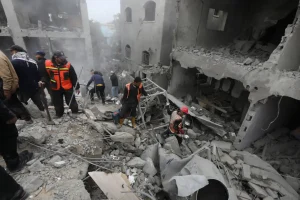
Instead of demonstrating goodwill, occupation forces have intensified killings, destruction, and the targeting of displacement centers. This move is viewed as a direct message reflecting Israel’s intention to continue its policy of killings and extensive military control.
The participating factions called on international mediators to urge the U.S. government and international bodies to take a firm position requiring the occupation to halt its escalation.
They stressed that no round of negotiations would achieve real success as long as the suffocating blockade and the systematic killing of civilians across Gaza continue.
Read Also: Palestinian Prisoners in Ofer Prison Face Deteriorating Conditions, Medical Neglect
Sources emphasized that there is a national consensus to establish a special committee to manage Gaza’s affairs during a transitional period, separate from previous organizational structures. They also added that the growing number of external proposals has contributed to the failure of the national project.
Political analysts warned that projects aimed at administering Gaza separately from the PLO and the Palestinian Authority could reinforce the geographic and political separation between the Gaza Strip and the West Bank.
They argued that the absence of key national forces from these negotiations serves an agenda that seeks to transform the Palestinian struggle from an issue of national liberation into merely a humanitarian and security crisis.
One analyst stated, “The Gaza governance map proposed by Mladenov is a form of political and humanitarian blackmail because it links aid, fuel, and reconstruction to the disarmament of the resistance.”
Read Also: Five Palestinians Martyred, Others Injured in Israeli Attacks Across Gaza
Hamas’ Open Position
In a press statement, a Hamas spokesperson affirmed that the movement is open to any approach that guarantees the rights of the Palestinian people and brings an end to the genocidal war.
Hamas called for improving the performance of the Peace Council (BoP) so that it serves as a guarantor of the implementation of the ceasefire plan rather than supporting the Israeli narrative aimed at imposing a new security reality.
Resistance leaders stressed that a united Palestinian position is the main pillar for confronting international pressure.
Read Also: Hamas: Funeral of 75 Gazans Highlights War’s Catastrophic Toll
They explained that the factions would carefully study the proposals presented by the mediators in order to build a joint response, and that any attempt to link humanitarian issues to complex political or military files constitutes a form of blackmail against the Palestinian people.[]
Mi’raj News Agency (MINA)
Read Also: Gaza Buries 75 Palestinians Whose Remains Were Found Under Rubble













 Mina Indonesia
 Mina Arabic
 Mina Sport
