






By: Imaam Yakhsyallah Mansur
بِسْمِ اللّهِ الرَّحْمنِ الرَّحِيم
Allah Subhanahu wa Ta’ala says:
وَالتِّيْنِ وَالزَّيْتُوْنِۙ ١ وَطُوْرِ سِيْنِيْنَۙ ٢ وَهٰذَا الْبَلَدِ الْاَمِيْنِۙ ٣ (التين [٩٥]: ١ــ٣)
Also Read: Women Reciting Qur’an Use Speakers, Is It OK?
“By the fig and the olive, by Mount Sinai, and by this secure city [Makkah].” (QS. At-Tiin [95]: 1–3)
In the verses above, Allah Ta’ala swears by four things: the Fig, the Olive, Mount Sinai, and the secure city of Makkah—the birthplace of the Prophet Muhammad Shallallahu alaihi Wasalam.
In interpreting these verses, Imam Ibn Kathir cites the opinions of Ibn Abbas, Mujahid, and Qatadah, stating that “At-Tiin” or The Fig and “Az-Zaitun” or The Olive do not merely refer to the fruits literally, but represent the region where they flourish: the land of Syam. Today, Syam encompasses Palestine and its surrounding areas.
This oath is not isolated; it binds geography, prophetic history, and the mission of monotheism (Tawhid). The Qur’an affirms that the land of Syam holds deep spiritual and historical significance in the journey of Islam as brought by the prophets.
Also Read: The Habit of Reading Qur’an Promotes Health, Here Is the Scientific Explanation!
In the second verse, Allah Ta’ala mentions Thuri Sinin (Mount Sinai), which is the place where Prophet Musa (Moses) Alaihi Salam received the revelation of the Torah. This signifies the continuity of the Divine message from Prophet Musa Alaihi Salam through to the Messenger of Allah, Muhammad Shallallahu alaihi Wasalam. The prophets were sent bringing one and the same religion: Islam.
Sayyid Qutb, in Fi Zhilal al-Qur’an, describes this oath as a confirmation of the long journey of Tawhid in shaping human dignity. These locations are the primary stages for the struggle of faith. In this framework, Palestine is a symbol of the eternal battle between truth and falsehood, justice and oppression. Human civilisation crumbles when the justice inherited from the prophets is discarded.
Palestine Does Not Belong to the Jews
Palestine is not merely a name on a map, but a living space inhabited, nurtured, and passed down from generation to generation for thousands of years. Palestinians built homes, planted fig and olive trees, worshipped, and buried their ancestors long before the Zionist Israeli colonisation took place.
Also Read: Health Benefits of Breaking Fast With Water and the Recommended Intake
Historical evidence shows that the region of Palestine has been inhabited since the third millennium BCE by the Canaanites, Philistines, and local Semitic groups. Prominent American historians and archaeologists, such as William F. Albright, assert that the Canaanites were the indigenous inhabitants of the region long before the emergence of ancient Israelite kingdoms. This fact is also recognised in much Western archaeological literature.

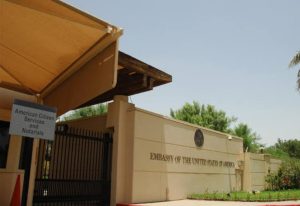
A passport authorised by the US Consulate in Jerusalem, calling it the Capital of Palestine (Photo: TikTok)
The continuity of the Palestinian population is also clearly recorded through the Roman and Byzantine periods, up to the Islamic era. Karen Armstrong, in her book Jerusalem: One City, Three Faiths, emphasises that the presence of the Palestinian people has never been interrupted, even as political powers shifted. They remained, farmed, traded, and worshipped, while empires came and went.
When Islam arrived in the 7th century, Palestine did not undergo colonisation, but rather integration. The Palestinian people—the majority of whom later embraced Islam, while some remained Christian—are the direct continuation of the previous local civilisations. Islam did not erase that history.
Even Israeli historian Ilan Pappé acknowledges that modern Palestinians are the direct descendants of the local society that has lived there for centuries. They are not newcomers or displaced immigrants.
Also Read: The Purpose of Fasting in Ramadan is Taqwa
Conversely, the Jewish claim to Palestine as the promised land has no basis in international law or universal historical legitimacy. Theological promises in holy books were never intended to legalise colonisation. Even among Orthodox Jews, many rabbis reject Zionism because it is seen as a misuse of religion for political ambition.
Historian Shlomo Sand, a professor of history at Tel Aviv University, in his book The Invention of the Jewish People, dismantles the myth that the Jewish people colonising Palestine today are a single ethnic group that was mass-exiled and returned two thousand years later. He asserts that many Eastern and Western European Jewish communities are the result of conversion, not direct descendants of ancient Palestinian inhabitants.
The narrative of the promised land is colonial propaganda deliberately constructed to justify the Zionist project. In fact, Ottoman census data and the British Mandate clearly show that Palestine had a majority Arab population long before the establishment of Israel in 1948. This fact is recognised even by official Western colonial documents.
Through propaganda, political agitation, international lobbying, and the support of imperialist powers, Zionism transformed myths into political claims. The expulsion of hundreds of thousands of Palestinians during the 1948 Nakba was not a war of independence, but ethnic cleansing, as acknowledged by many contemporary Israeli historians like Benny Morris, Ilan Pappé, and others.
Also Read: Divine Concept is the Answer to Global Crisis: Abul Hidayat Saerodjie
Therefore, when Palestinian land is seized, homes are destroyed, and the people are expelled, resistance is a morally and legally legitimate consequence. The Palestinian people are not taking the rights of others; they are defending their right to live on their land and their dignity. International law also recognises the right of colonised nations to resist foreign occupation.
The succession of empire after empire never severed the right of the Palestinian people to live there, nor did it displace the rightful owners of the land. Thus, the real issue is not a dispute over land, but the restoration of rights to the legitimate owners: the Palestinian people.
When propaganda attempts to obscure facts with the language of “peace” used to cover and legalise colonisation, what is actually being pursued is not justice, but the silencing of truth and the legitimacy of occupation.
The Questionable Slogan of “Peace”
Also Read: Friday Sermon: The Virtues of the Holy Month of Ramadan
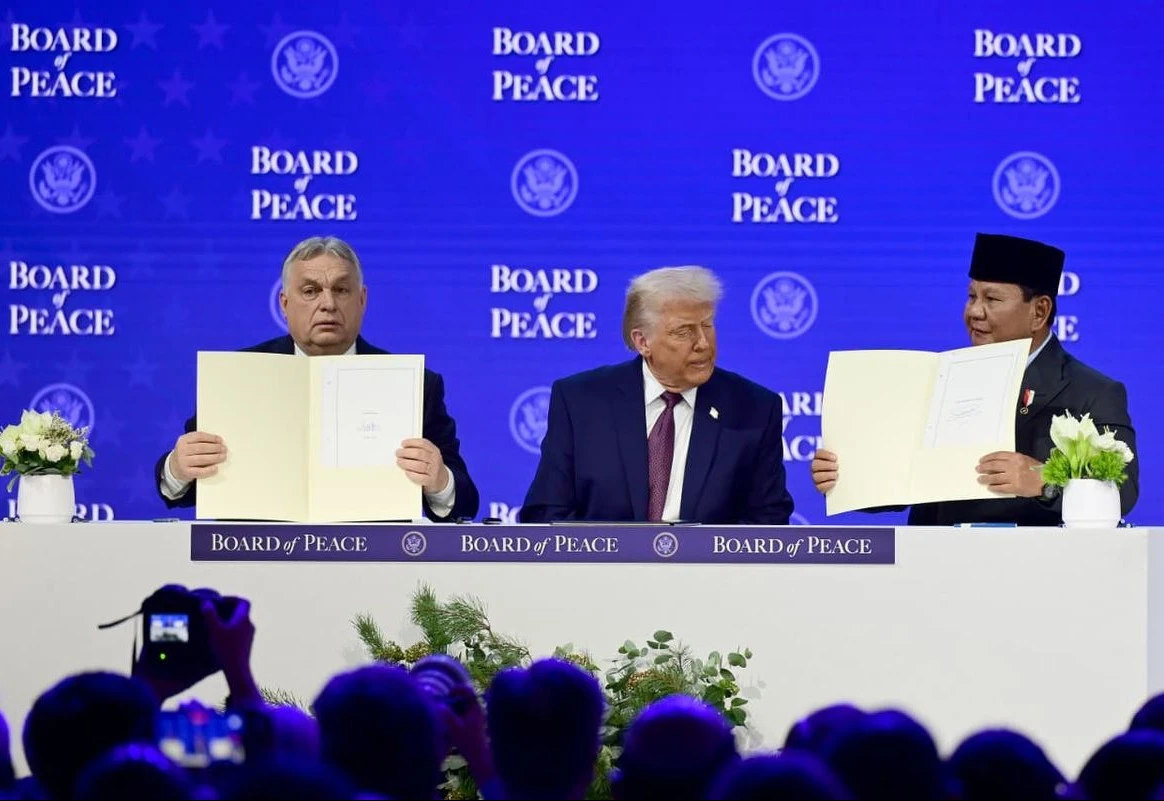
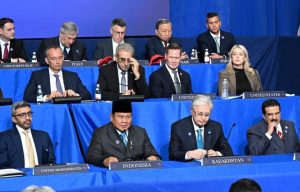
The formation of the Board of Peace (BoP), initiated by former United States President Donald Trump, has been presented as a diplomatic initiative aimed at achieving peace, especially in Palestine. However, similar to many previous efforts, the BoP raises a critical question: who is this institution truly intended to serve?
For the Palestinian people, the term “peace” often rings hollow or sounds cynical. It arrives not to end colonisation and uphold justice, but rather as a new form of legitimacy for the status quo of oppression and occupation that has persisted for decades.
Historical experience shows that various peace schemes—whether through UN resolutions or other bodies—have consistently resulted in strengthening the position of the occupier. Meanwhile, the fundamental rights of the Palestinian people continue to be ignored, and their territorial lands continue to shrink.
It is within this context that the BoP must be critically questioned. Instead of addressing the root of the problem—namely, colonisation, land seizure, and the displacement of the Palestinian people—the BoP risks obscuring the substance of the conflict, even when wrapped in soothing diplomatic language.
Also Read: Friday Sermon: The Month of Sha‘ban, the Path Toward the Light of Ramadan
The peace being offered appears to be a diversion from the core issues; there is absolutely no mention of how to deliver justice, abolish colonisation, or end all forms of tyranny in the Palestinian territories.
Furthermore, the BoP demonstrates a tendency to shift the Palestinian people from being the primary subjects of their own destiny to being mere objects of an ambitious project. When the future of a nation is discussed without the involvement of the rightful owners of the land, peace loses its moral significance. It transforms into an elite agreement far removed from the reality of suffering on the ground.
Palestine and the Test of Global Conscience
Palestine is a mirror and a test for the world’s conscience. It is there that human values are put to the test: whether the world is still capable of distinguishing between justice and deception, between a true peace and a fake forced peace, and between a sincere effort to resolve the crisis or mere “cosmetics” in diplomacy.
Also Read: The Fragility of the United States and Its Allies
Every ruined building, every crying child, and every seized plot of land presents a simple yet soul-shaking question: to what extent does the global conscience still live, or has it instead become numb to the influence of interest and power?
History shows that colonisation does not always arrive with a fierce face. It often presents itself through language that sounds gentle: “stability,” “reconciliation,” and “peace.” When these words are used to cover up inequality and structural violence, what occurs is not the healing of wounds, but the normalisation of crime.
In this context, the Board of Peace (BoP) must be tested and questioned, including Indonesia’s involvement in the institution. Peace without the acknowledgement of colonisation, without the cessation of land seizures, and without the restoration of the fundamental rights of the Palestinian people, is nothing more than a political illusion.
It may appear orderly at the negotiating table, yet it remains fragile and empty in reality on the ground. A peace that ignores justice is not a bridge to a better future, but a curtain that conceals crime and darkens the face of civilisation.
Also Read: Water as a Spiritual Foundation for a Harmonious Family
We support the fatwa of the Indonesian Ulema Council (MUI), which asserts that any form of idea or scheme that ignores justice and Palestinian independence is morally forbidden (haram) and contrary to Islamic values.
A Board of Peace without justice is not a solution, but an illusion wrapped in the language of diplomacy. True peace is never born from the legalisation of colonisation and the stripping of rights; rather, it should bring forth justice and the courage to voice and uphold it, however difficult it may be to realise.
Mi’raj News Agency (MINA)
وَاللَّهُ أَعْلَمُ بِالصَّوَابِ
Also Read: Imaam Yakhsyallah: Al-Aqsa Mosque Is the Barometer of the Ummah’s Honor













 Mina Indonesia
 Mina Arabic
 Mina Sport