





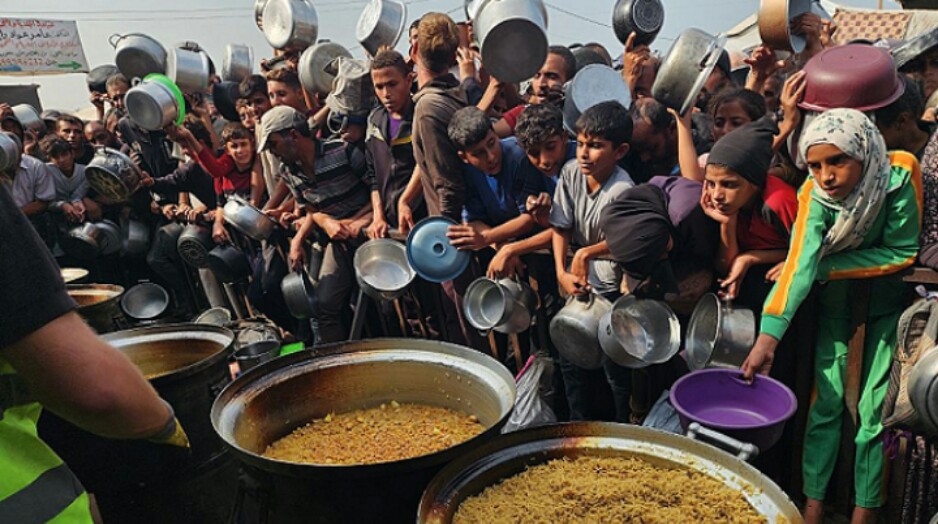

Gaza, MINA – Humanitarian conditions in the Gaza Strip are heading toward further deterioration as international aid programs face widening cuts and declining funding, threatening hundreds of thousands of Palestinians with the loss of food assistance and placing vital health services at risk, the Palestinian Information Center reports.
The Government Media Office (GMO) in Gaza warned that reductions in international aid programs could deepen the humanitarian crisis at a time when more than two million Palestinians are already facing severe shortages of food, health care, shelter, and basic services.
Ismail al-Thawabta, GMO director general, said the World Food Program’s (WFP) decision to reduce assistance due to funding shortages could deprive around 400,000 Palestinians of basic aid.
According to figures cited by the GMO, the number of WFP beneficiaries in Gaza has fallen from about 1.5 million to 1.1 million, while the number of daily hot meals provided by the program has dropped from 250,000 to 150,000.
Read Also: Palestinian Killed, Others Wounded in Fresh Israeli Attacks Across Gaza
The cuts have also affected other forms of assistance. Since July, the WFP has reduced cash support for about 75,000 people by 25% and cut food rations for around 220,000 families by half.
Aid reductions have extended to the occupied West Bank, where relief coverage has been cut by 50%, reducing the number of beneficiaries from about 400,000 to 200,000.
The cuts come amid a major funding gap affecting humanitarian operations. According to WFP data, relief work in Gaza and the West Bank faces a funding shortfall of more than $420 million, threatening the agency’s ability to maintain even minimum operations until the end of the year.
Local officials warned that any further reduction in assistance would quickly affect families already struggling with the consequences of war, displacement, loss of income, and rising dependence on humanitarian aid.
Read Also: Israeli War in Gaza Kill 11,900 Palestinian Women
Al-Thawabta warned against using aid, food, and medicine as tools of pressure against Palestinians, saying the decline in international funding cannot be separated from the political and field conditions in Gaza.
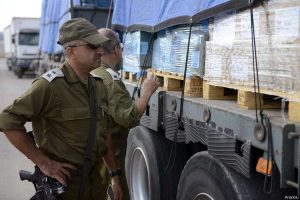
The GMO accused Israel of pursuing an “engineering-of-starvation” policy by closing crossings, obstructing the entry of aid, fuel, and shelter materials, and targeting food distribution facilities.
It said declining support for organizations such as the WFP, UNRWA, and the World Health Organization (WHO) goes beyond a financial crisis and amounts to political pressure on Palestinians.
The impact of aid cuts is not limited to food security. Al-Thawabta also warned of serious consequences for Gaza’s health sector after WHO reduced some of its services and fuel support for hospitals.
Read Also: Israeli Army Tightens Gaza Blockade With Trench and Embankment Along Yellow Line
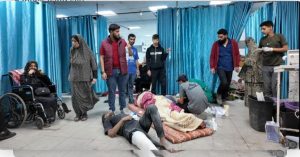
He said fuel shortages could halt vital medical services and endanger the lives of thousands of patients and wounded people, especially as hospitals depend on generators to operate essential departments amid the continuing electricity crisis.
The most vulnerable services include intensive care units, infant incubators, and dialysis departments, which cannot operate safely without a steady power supply.
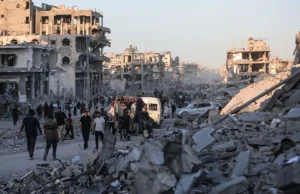
The funding crisis is unfolding as Gaza faces overlapping shortages in food, fuel, medicine, medical supplies, and shelter materials, alongside widespread damage to infrastructure, hospitals, and public services.
The International Commission to Support Palestinians’ Rights, known as Hashd, warned in a statement on September 21 that declining international funding coincides with restrictions on the entry of aid, fuel, and essential supplies.
Read Also: 145 Israeli Settlers Desecrate Aqsa Mosque Under Police Escort
It said the consequences could affect food, health care, water, sanitation, energy, transport, and shelter. Hashd said around 1.4 million people face high levels of food insecurity and cited a 40% reduction in cash assistance for about 375,000 people due to funding shortages.[]
Mi’raj News Agency (MINA)
Read Also: 82% of Gaza Buildings Damaged in Israeli Genocide: Statistics Bureau







![Security forces take measures as protesters gather outside Woolwich Crown Court to show support for a group known as the “Filton 24,” whose trial is ongoing over a protest at an Israeli defense company’s facility in Bristol in 2024 in London, United Kingdom on June 12, 2026. [Aysu Biçer – Anadolu Agency]](https://en.minanews.net/wp-content/uploads/2026/06/Screenshot_2026-06-13-17-48-18-76_40deb401b9ffe8e1df2f1cc5ba480b12-300x194.jpg)









 Mina Indonesia
 Mina Arabic
 Mina Sport