







Aden, MINA – Yemen’s government on Sunday approved a draft law proposing to designate the Houthi movement as a “terrorist organization” and criminalize its activities and financing.
The decision was made during a Cabinet meeting in the temporary capital, Aden, chaired by Prime Minister Shaya al-Zindani, according to a statement from the prime minister’s office.
Following a presentation by the minister of legal affairs, the Cabinet approved the draft and instructed officials to complete the constitutional and legal procedures required for its ratification.
The meeting took place a day after an attack on King Khalid International Airport in Riyadh, Saudi Arabia, which Saudi authorities initially said killed 12 people and injured 309 others. The attack drew widespread condemnation, while the Houthi movement reportedly threatened further strikes against Saudi Arabia.
Read Also: Palestine Solidarity Must Become Intellectual Strength and Institutional Action
In its statement, the Cabinet said Yemen had reached a “decisive stage” in efforts to restore sovereignty over the country’s entire territory and end what it described as a Houthi coup financed and directed by Iran.
Al-Zindani called on executive authorities to shift from reacting to developments toward taking proactive measures. He also instructed officials to strengthen preparedness and meet the needs of the armed forces, military formations, security forces, and Popular Resistance.
The Houthis had not commented on the proposed designation as of 1445 GMT on Sunday, according to Anadolu.
The proposed legislation marks a further escalation in the Yemeni government’s political and legal confrontation with the Houthi movement, which has controlled the capital, Sanaa, and several other areas since September 2014.
Read Also: Bahrain Calls for UN Action and Compensation over Iranian Attacks
In March 2015, a Saudi-led coalition intervened in Yemen in support of the internationally recognized government. The conflict has continued for more than a decade, causing extensive casualties, mass displacement, and a severe humanitarian crisis.
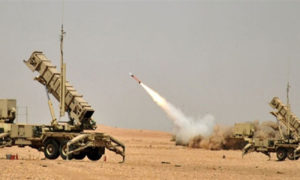
The Houthis have carried out missile and drone attacks against Saudi territory in recent years, targeting airports, energy facilities, and other infrastructure. The latest attack in Riyadh has heightened concerns over civilian safety and the risk of further regional escalation.
The proposed terrorist designation could have implications for political engagement and ongoing efforts to reach a negotiated settlement. Its practical effects will depend on the final text of the legislation, the procedures for ratification, and how the law is implemented.
Yemen’s conflict has also been marked by allegations of serious violations of international humanitarian law, including attacks affecting civilians and restrictions on humanitarian assistance. Millions of Yemenis continue to face displacement, food insecurity, disease, and limited access to essential services.
Read Also: Activists Urge Illinois to Withdraw All Investments in Israeli Bonds
International efforts to secure a ceasefire and resume negotiations remain critical as renewed hostilities threaten to deepen the humanitarian crisis and further complicate prospects for a lasting political settlement.[]
Mi’raj News Agency (MINA)
Read Also: Indonesia Elected to ICAO Council for 2026–2028 After 25 Years


















 Mina Indonesia
 Mina Arabic
 Mina Sport
