





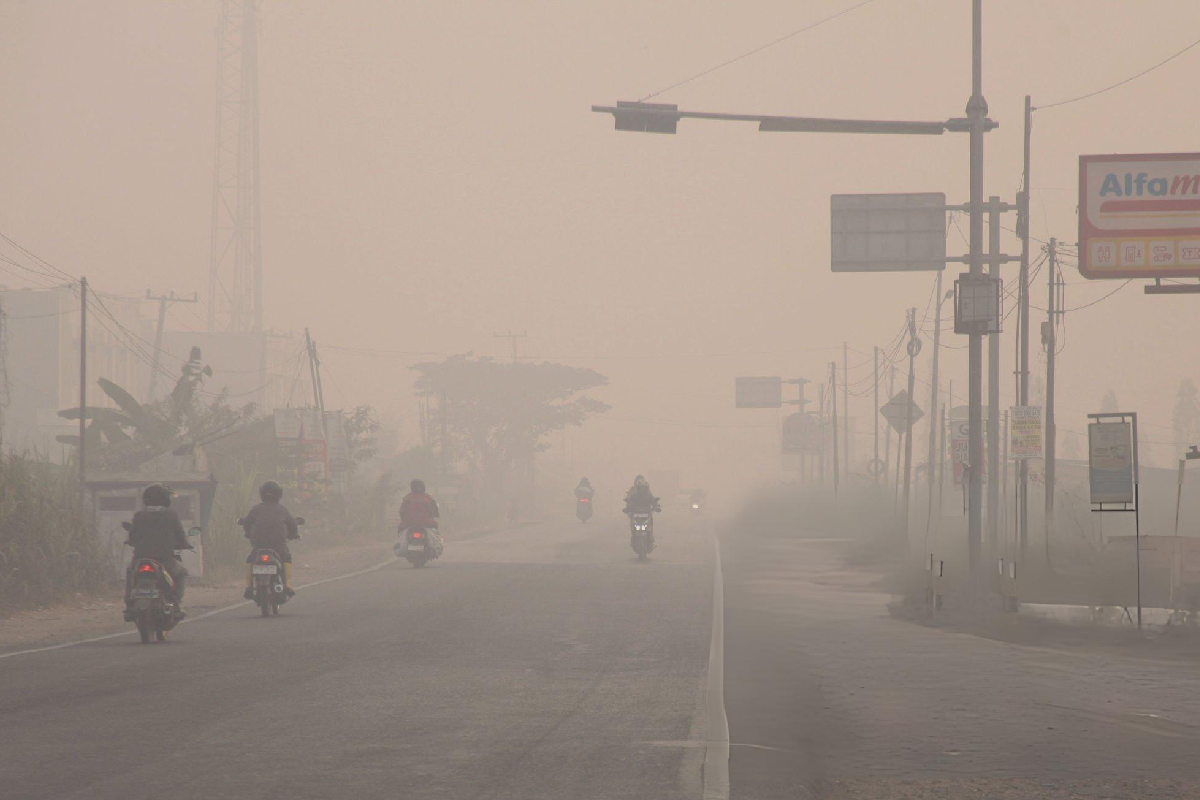

Jakarta, MINA – Indonesia’s Ministry of Health has recorded 401,586 cumulative cases of acute respiratory infection (ISPA) across seven provinces and 63 districts and cities affected by forest and land fires, with young children and the elderly bearing the heaviest burden, Republika reported.
Ministry spokesperson Widyawati said the figure included 3,906 new cases based on monitoring data as of 4:00 p.m. on November 2, 2026, and that cases continue to rise daily at health facilities in affected regions.
“The number includes an addition of 3,906 new cases based on monitoring data as of November 2, 2026, at 4:00 p.m. Western Indonesian Time,” Widyawati said during the BNPB Info Bencana Terkini broadcast in Jakarta on Wednesday, November 4, 2026.
Of the total, 91,913 cases were recorded among children under five, followed by 87,704 cases among children aged 6 to 9, and 56,092 cases among people over 60.
Read Also: Russia Opens Cultural Space at Istiqlal Mosque Library
The ministry is also closely monitoring vulnerable groups requiring extra care: 590 pregnant women at risk of pregnancy complications from the pollution, 1,530 asthma sufferers vulnerable to repeated attacks, and 8,086 outdoor workers who must breathe toxic air daily.
Demographically, the heaviest impact has been felt in urban centers across Sumatra and Kalimantan. “The areas with the largest affected populations include Banjarbaru in South Kalimantan, Pekanbaru in Riau, and Pontianak in West Kalimantan,” Widyawati said.
In Riau, the respiratory case curve peaked at 23 new cases in a single day. West Kalimantan recorded up to six daily cases, while South Kalimantan ranged from zero to four cases per day entering health services.
Beyond the lungs and respiratory tract, exposure to ash particles from the fires has triggered other health problems, including eye irritation. Widyawati warned that rubbing irritated eyes can worsen infection.
Read Also: KSrelief Launches First Phase of Earthquake Relief Aid on Flores Island
“Exposure to smoke and dust particles also causes eye irritation, so the public is urged to avoid smoke exposure and not rub their eyes when they feel sore or itchy,” she said.
To address medical needs in the field, the government is working to ensure basic life support facilities, particularly clean oxygen supplies for residents experiencing respiratory crises. In Riau, at least 10 oxygen houses have been prepared for direct public access.
However, the ministry stressed that the key to handling the crisis lies in accessibility for residents seeking treatment, not merely in the number of physical facilities built.
“Our attention is not merely on the number of oxygen houses available, but also on how to ensure that oxygen support can be accessed by people who need it, especially patients with breathing difficulties,” Widyawati said.
Read Also: Indonesian Army Helicopter Crashes in Seruyan During Firefighting Mission
The respiratory figures track closely with the fire data reported by the National Disaster Mitigation Agency, which recorded 864 hotspots across six provinces and 1,615 hectares of land still under management as of Wednesday. Central Kalimantan recorded the highest number of hotspots at 425, an increase of 50 percent from the previous day, followed by Jambi with 150, up 134 percent, and South Sumatra with 60, up 186 percent.
The concentration of cases in Banjarbaru, Pekanbaru, and Pontianak reflects the geography of the haze, which settles over urban areas in Sumatra and Kalimantan where populations are denser and exposure is sustained. The dominance of children under five and the elderly among cases is consistent with their heightened vulnerability to particulate pollution, and the monitoring of pregnant women, asthma patients, and outdoor workers indicates the ministry is tracking groups at risk of severe outcomes rather than only counting infections.
The crisis also carries economic and social dimensions. Outdoor workers are among the most exposed, as they cannot avoid the air while earning a living, and the ministry’s emphasis on accessibility over infrastructure suggests that oxygen houses alone will not resolve the problem if patients cannot reach them. The fires are largely linked to land clearing for agriculture and plantations, particularly on peatlands, and the BNPB has appealed to the public not to clear land by burning while deploying water bombing operations to contain the spread.[]
Mi’raj News Agency (MINA)
Read Also: Indonesia Wildfires: 864 Hotspots Detected Across Six Provinces


















 Mina Indonesia
 Mina Arabic
 Mina Sport
